
Last updated November 15, 2026
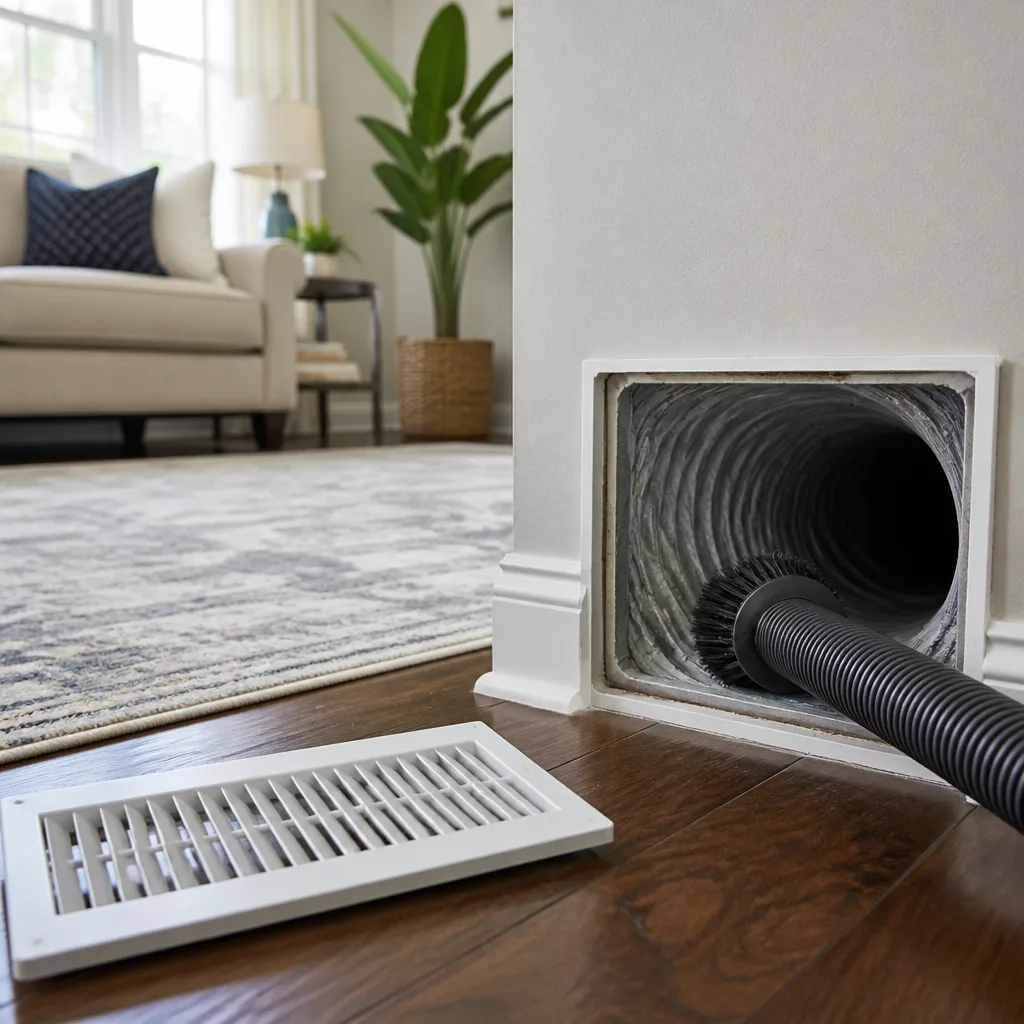 Whole-home duct cleaning
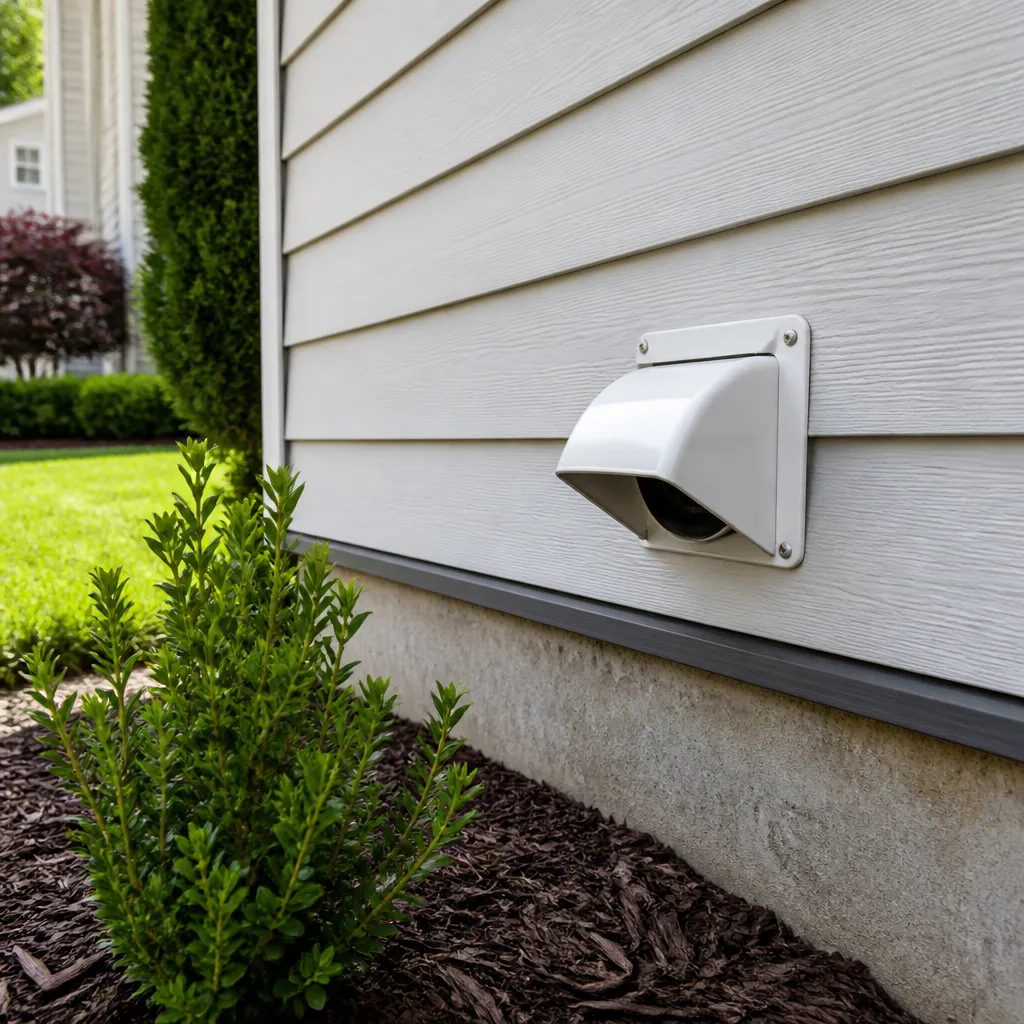 Dryer vent cleaning
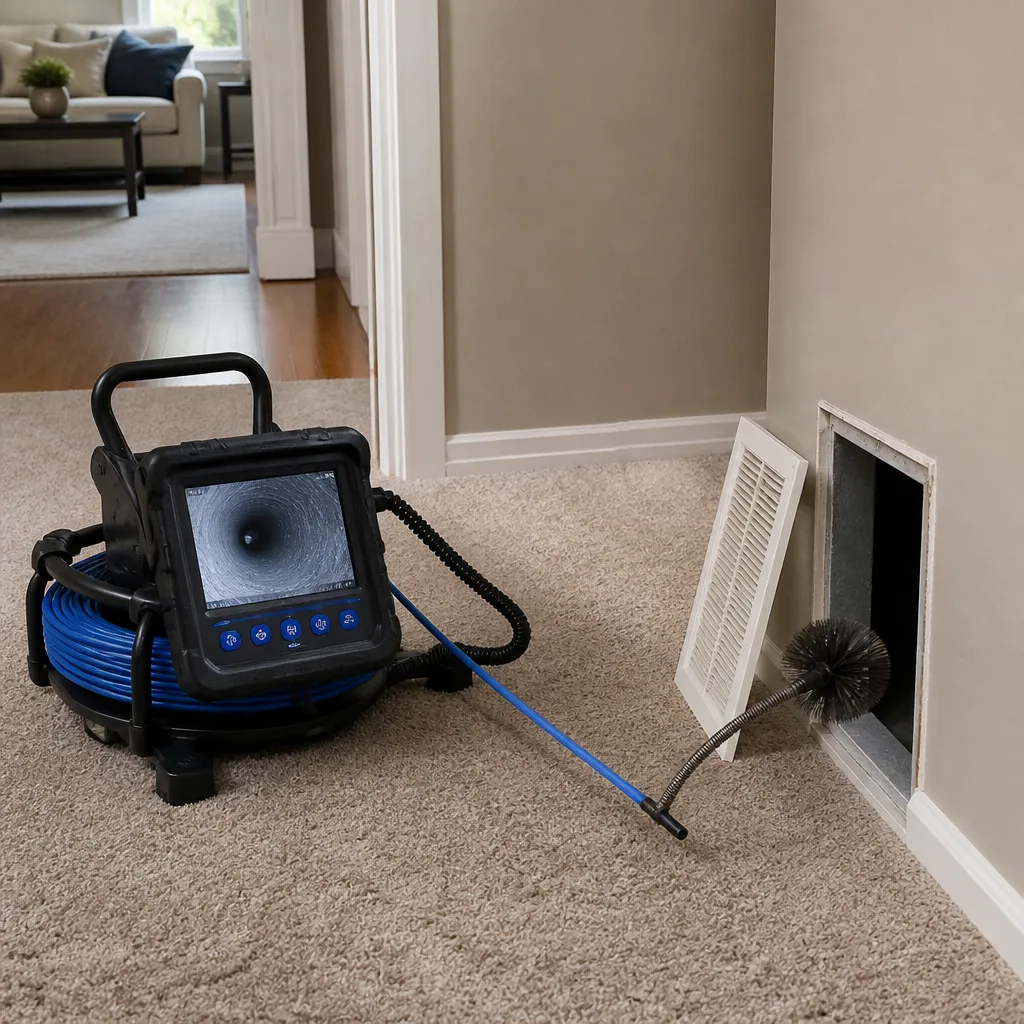 Camera inspection
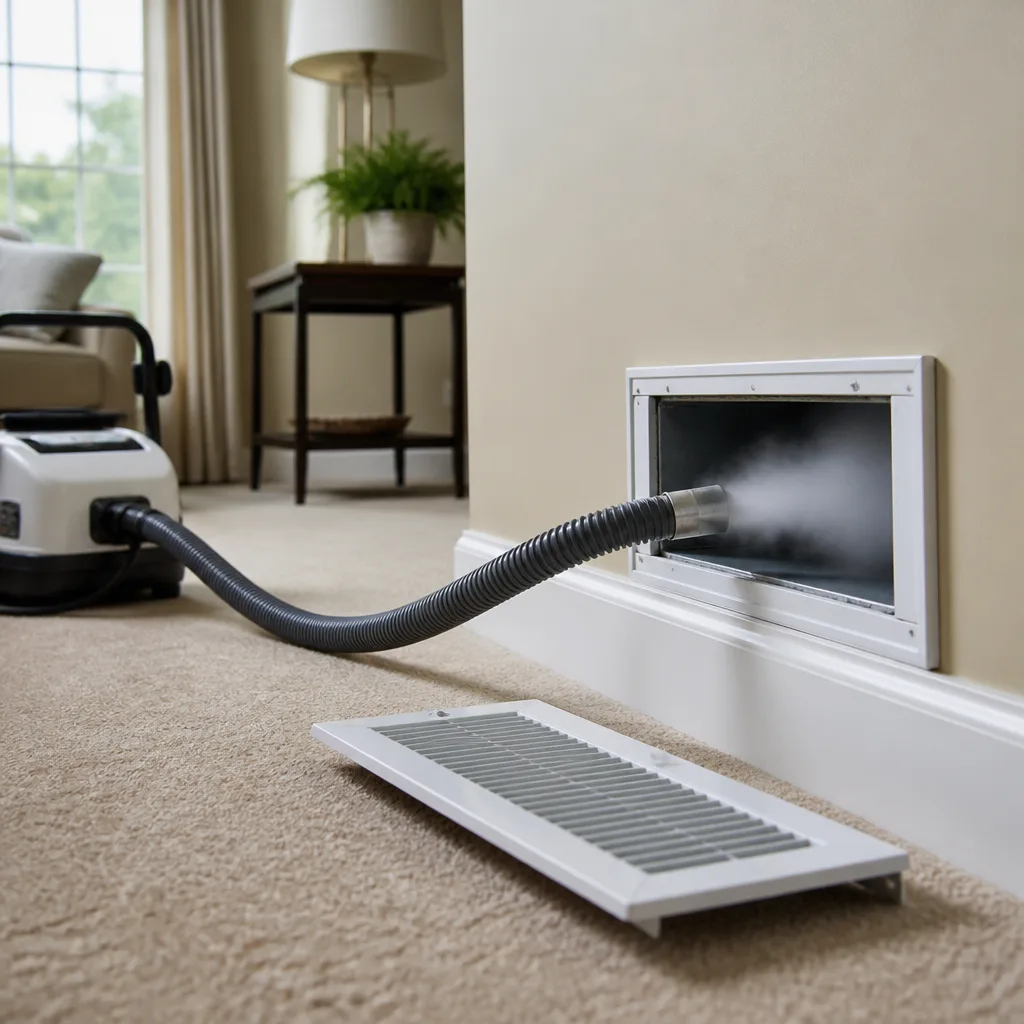 Sanitizing & deodorizing
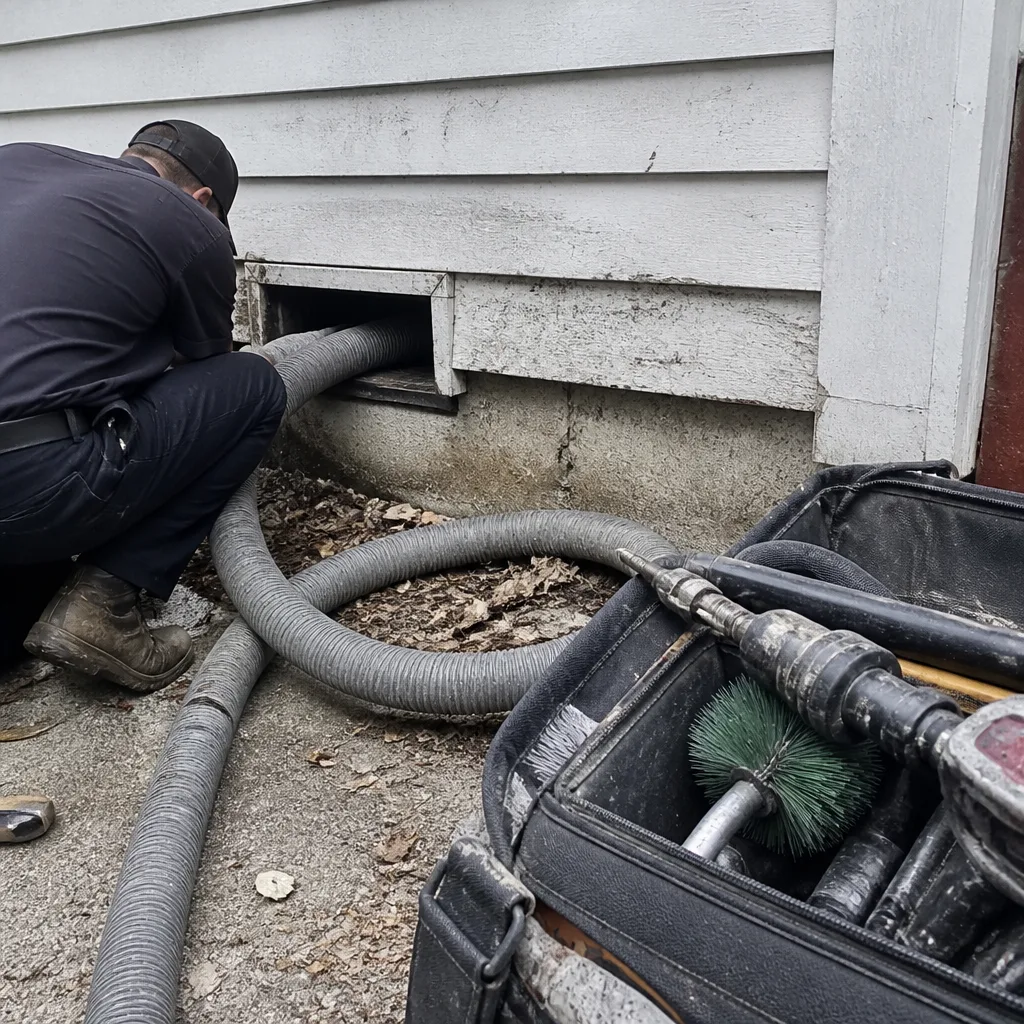
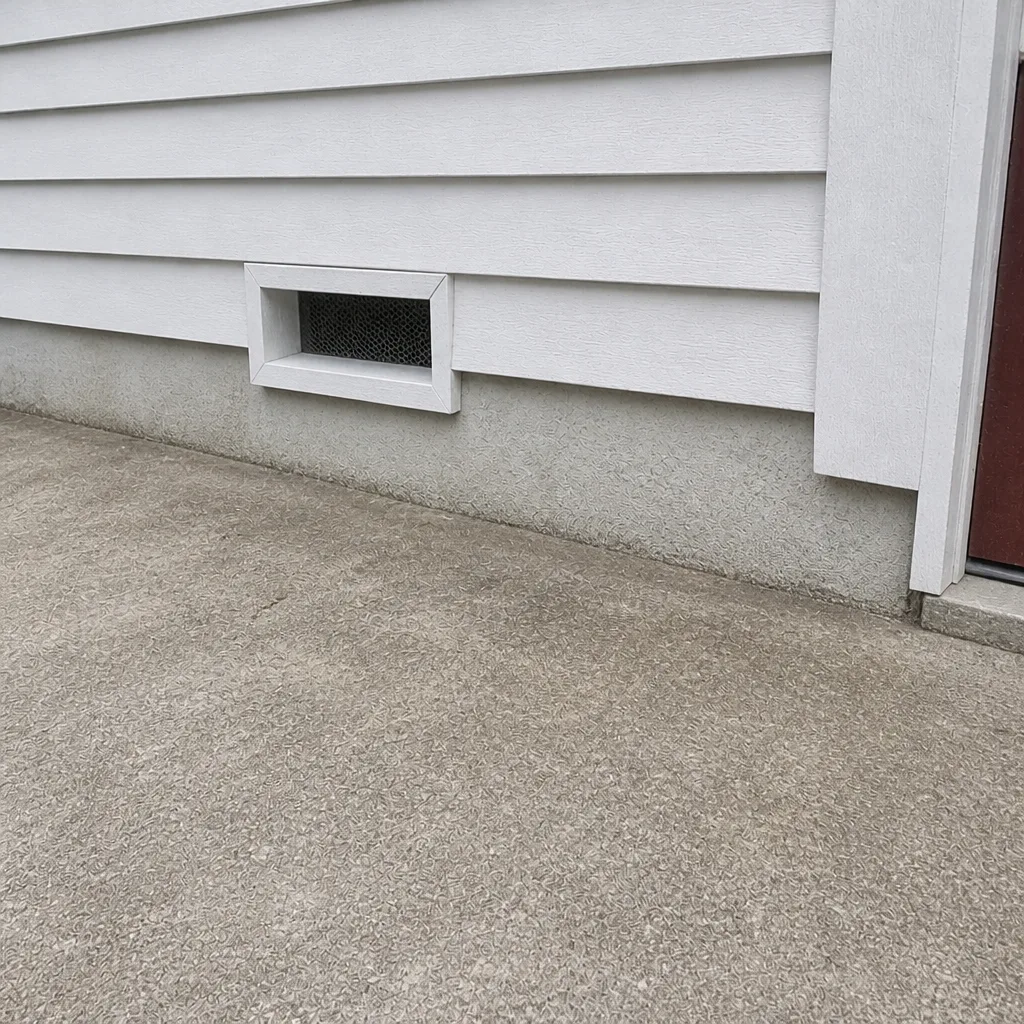
Whole-system duct and dryer vent check with before-and-after photos - you see exactly what came out of your vents
That "$99 whole-house special" is a bait ad - the real number appears once they are in your hallway, or the "clean" is a shop-vac at the register. We photograph the inside of your ducts before and after instead.
The Complete Guide to Air Duct Cleaning in Charleston
Most homeowners in Charleston assume their ductwork stays clean because the filter gets changed and the air still feels cold. That assumption is where contamination starts. The filter catches what it can at the return, but everything that gets past it – dust, sheetrock powder from a renovation, pet dander, and the moisture-driven growth that comes with long cooling seasons – settles inside the ducts and stays there. Your system then recirculates it for years. In this guide we walk through what air duct cleaning actually involves, how Charleston’s climate and construction shape the contamination you’re dealing with, what to look for in a real cleaning versus a discount walkthrough, and how to read the documentation a legitimate job produces. By the end you’ll know how to tell a professional service from a shop vac and a coupon.
Quick Answer
Air duct cleaning in Charleston means removing settled contaminants from the supply and return duct system, the air handler, and the registers using professional-grade contact cleaning paired with HEPA extraction and containment. A real cleaning is defined by negative pressure, containment, and source removal, not by how many vents a crew claims to have “done.” If you’re dealing with musty airflow, a recent renovation, or an HVAC efficiency problem, a documented whole-system cleaning is the right starting point before you spend money on anything else.
Styles & brands we work with
- Whole-home duct cleaning
- Dryer vent cleaning
- Camera inspection
- Sanitizing & deodorizing
Table of Contents
- Why Charleston’s Climate Changes the Duct Cleaning Question
- Slab-on-Grade Foundations and Crawlspace Humidity: A Charleston Contamination Vector
- Source-Removal Cleaning vs. What a Shop-Vac Crew Actually Does
- Equipment Benchmarks: Why Negative Pressure Is Measured in CFM
- How to Read a Post-Cleaning Report
- When Cleaning Alone Won’t Fix the Problem
- What a Full Professional Duct Cleaning Looks Like, Step by Step
- How Often Ducts Really Need Cleaning in Charleston
Why Charleston’s Climate Changes the Duct Cleaning Question
Charleston averages over 200 cooling days per year. Your air handler runs nearly twice as long as one in a northern climate, and every one of those hours is pulling air through the duct system. That runtime alone changes the math on how quickly contamination builds. But the bigger factor is moisture.
Long humid summers mean duct interiors sit at elevated relative humidity for most of the year. Dust that settles in a dry-climate duct stays dust. Dust that settles in a humid Charleston duct becomes food for microbial growth. That’s the mechanism behind the musty smell many homeowners notice when the system first kicks on – it’s not a filter problem, it’s a duct-interior problem. A fresh filter installed in July won’t fix it because the filter sits upstream of the contamination.
Cooling season also drives condensation on any duct surface below dew point. In a well-sealed, properly insulated system that’s a minor issue. In an older system with leaks, disconnected joints, or failing insulation, it’s a real one. Those are the same leaks pulling attic air, crawlspace air, and untreated outdoor humidity into your supply ducts, which is why filtration problems and duct leakage tend to compound rather than resolve on their own.
What this means practically: a duct cleaning guide written for a dry, mild climate doesn’t translate cleanly to a Charleston home. The contamination you’re dealing with is more moisture-driven, more microbial, and more tied to building envelope issues than the national-average case. That’s why we evaluate systems here against Lowcountry conditions first, not against a generic checklist.
Slab-on-Grade Foundations and Crawlspace Humidity: A Charleston Contamination Vector
Much of Charleston’s housing stock sits on slab-on-grade or on shallow, ventilated crawlspaces. Both create a duct contamination path you won’t find in a basement-climate market. Slab construction typically means ducts run in the attic or through soffits rather than beneath the floor, which exposes them to the most extreme temperatures and humidity swings in the house. Crawlspace construction means return ducts and occasionally supply runs travel through a space that stays warm and damp, especially through summer.
Here’s what that does to your system:
- Attic duct runs bake and sweat. In a Lowcountry attic, duct surfaces cycle between very hot and cooled-conditioned, and any insulation gap invites condensation. Sagging flex duct with a crushed inner liner loses airflow and collects debris in the same spot.
- Crawlspace returns pull in more than air. A leaky return traveling through a humid crawlspace draws in mold spores, soil dust, and moisture along with the return air. This is often why the musty smell appears strongest at the returns.
- Disconnected flex joints go unnoticed. A single separated joint in an attic run drops your delivered airflow and dumps conditioned air into the attic. Homeowners read this as an HVAC efficiency problem and call an HVAC contractor, when the real fix is a duct repair.
We look at foundation type and duct routing before we ever quote a cleaning, because a slab-on-grade home with attic ducts and a crawlspace home with a leaky return need different scopes. This is the kind of local context a company that works in Charleston every day picks up quickly and a national call-center won’t.
Source-Removal Cleaning vs. What a Shop-Vac Crew Actually Does
The industry standard for legitimate duct cleaning is source removal – physically dislodging the contamination from the duct surfaces and capturing it before it re-enters the home. Everything else is theater. Here’s the honest contrast.
What source-removal cleaning involves
- Containment is set up to seal supply registers and create a controlled environment, with an air scrubber running to capture airborne particulates during the work.
- Negative pressure is established on the duct system so loosened debris travels toward the extraction point rather than into the living space.
- Rotating brush and contact-cleaning tools agitate the duct walls to break settled material loose from every surface, not just the visible register boots.
- High-capacity HEPA extraction simultaneously pulls the loosened debris out of the system while the brushes work.
- The air handler, coil cabinet, and accessible plenum are cleaned as part of the same job – these are inside the airstream and accumulate the same material as the ducts.
- Registers and grilles are removed, cleaned, and reinstalled.
- The system is inspected post-cleaning and any damage or disconnection found during the job is documented.
What a shop-vac crew actually does
Typically: a handheld or shop-grade vacuum pushed into a few registers, maybe a quick wipe of the returns, no containment, no negative pressure, no air scrubber, and no access to the plenum or air handler. Whatever gets stirred up during the process gets recirculated into the house, and the material that was attached to the duct walls a few minutes earlier is now airborne. You paid for a disturbance, not a removal.
This is the gap that matters. Cleaning is defined by what leaves the system, not by how long someone spent inside the house.
Equipment Benchmarks: Why Negative Pressure Is Measured in CFM
Negative pressure is the single most important number in a duct cleaning job, and it’s the number discount companies can’t quote. Negative pressure is what keeps loosened debris moving toward the extraction point instead of into your living room. It’s measured in cubic feet per minute, or CFM, and it has to exceed the CFM your air handler is pulling, or the system is effectively breathing out while you’re trying to clean it.
A residential shop vacuum moves somewhere in the range of a strong household appliance. Professional rigs move a whole order of magnitude more air, and they’re paired with HEPA-grade filtration so the exhaust leaves clean. That’s why the equipment tier matters:
- Rotobrush contact-cleaning systems use rotating brushes with simultaneous high-volume extraction, paired with HEPA vacuum capacity. That combination is the same category of equipment used on commercial restoration projects.
- Nikro HEPA vacuum rigs provide the vacuum and filtration backbone, so the loosened material is captured rather than exhausted back into the house.
- Abatement Technologies air scrubbers run on-site to actively capture airborne particulates during the job, rather than recirculating them through the home.
These tool categories are the tier used in remediation work because they solve the exact problem cleaning is supposed to solve. A shop vac and a coupon solve a different problem – the marketing one – and leave the duct surfaces just as loaded as before, only now with the loose material redistributed.
Our technicians have up to 15 years of experience running this equipment, and customers can ask any crew they hire what machines and what CFM rating they’re bringing before booking. The answer tells you which tier you’re dealing with.
How to Read a Post-Cleaning Report
A post-cleaning report is the difference between a service you can verify and a verbal “all clear” you have to take on faith. Legitimate documentation lets a homeowner or property manager see the job without having been on-site. Here’s what to look for.
What a real report includes
- Before-and-after photos of the customer’s own ducts, not stock images. Photos of the same duct run before and after are the single most useful record because they let you see the difference yourself.
- A written scope listing what was cleaned – supply runs, return runs, air handler, registers, plenum – so you know exactly what was and wasn’t included.
- Equipment and process notes naming the extraction and scrubber equipment used, plus confirmation that negative pressure was maintained.
- Diagnostic findings listing any leaks, disconnects, damaged flex sections, or microbial growth observed, with location described in terms you can act on.
What a verbal report usually means
“It looks good in there” with no photos, no scope, and no findings. If a company won’t produce documentation of the specific job, the customer can’t know whether the work happened as described. As a property manager or a homeowner, treat the report as the receipt. No documentation, no verification.
When Cleaning Alone Won’t Fix the Problem
Cleaning removes the contamination that’s there. It doesn’t close the door contamination came through. In a Charleston home, the two most common doors are leaky duct joints and failed duct insulation, and if those stay open, a cleaned system recontaminates faster than it should.
Cases where cleaning needs to be paired with duct repair:
- Disconnected or separated flex joints. A gap in an attic or crawlspace run drops delivered airflow and pulls unconditioned air in. Cleaning without reconnecting the joint is a temporary win.
- Crushed or torn flex duct. Lowcountry builds commonly use flex duct in long attic runs. Where the inner liner is torn or the duct is crushed, airflow is restricted and dust settles in the low spot, and no amount of cleaning gets the run back to its intended performance.
- Failing duct insulation. Worn insulation invites condensation on the duct surface, which is the moisture source for regrowth. Sealing the run and replacing the insulation closes the loop.
- Seam and joint leaks on metal trunks. Small leaks are cumulative – a dozen pinholes in a plenum add up to a measurable loss and invite unconditioned air into the airstream.
We repair what we find. That’s the practical reason to hire a company that carries duct repair as a core service rather than as an upsell referral. Findings that show up during cleaning can be remedied in the same engagement, so the customer isn’t handed a punch list and told to call someone else. It also means the cleaning result holds.
What a Full Professional Duct Cleaning Looks Like, Step by Step
Every home is different, but the shape of a professional cleaning is consistent. Here’s what a full job involves from start to finish.
- Walkthrough and diagnosis. We look at the system layout, foundation type, duct material and routing, and any obvious hotspots – musty returns, sagging runs, disconnected joints. This determines the scope.
- Containment setup. Supply and return openings are sealed to control the work environment, and Abatement Technologies air scrubbers are positioned to capture airborne particulates during the job.
- Negative pressure on the system. The extraction rig establishes negative pressure so loosened debris travels toward the capture point, not into the living space.
- Contact cleaning with simultaneous HEPA extraction. Rotobrush contact tools agitate the duct interiors while the Nikro HEPA rig pulls the loosened material out. This step is the actual removal.
- Air handler and plenum access. The coil cabinet and accessible plenum are cleaned as part of the airstream system, not skipped.
- Register removal and cleaning. Each register and grille is removed, cleaned, and reinstalled.
- Post-cleaning inspection and documentation. Before-and-after photos of the customer’s own ducts, a written scope, and diagnostic findings are gathered and delivered.
- Repair recommendations where needed. Any leaks, disconnect, or damaged runs found along the way are documented and can be repaired in the same engagement.
This is air duct cleaning done as a technical job. It’s also why we treat dryer vent cleaning as its own dedicated service rather than a quick add-on – lint and moisture in a Charleston home can build fast, and dryer vent cleaning deserves the same professional equipment as the ducts. One specialist, three services, because the work is different enough to warrant treating each one properly.
How Often Ducts Really Need Cleaning in Charleston
How often really depends on how your system is running, not on a calendar rule. A house with pets, recent renovation dust, a longer cooling season, or a known contamination trigger likely needs attention sooner than a house with none of that. Here’s how we think about it.
- Recently renovated home: sheetrock dust, sawdust, and construction debris settle into ducts fast and should be cleaned once the project is done. Don’t wait for a smell.
- Musty airflow or visible dust at the registers: the system is telling you the ducts are loaded. Investigate sooner rather than later.
- Efficiency complaints or uneven cooling: cleaning plus a duct inspection surfaces leaks and crushed runs that are often the real cause.
- Property manager turnover or a sale: a documented cleaning with before-and-after photos gives a clean handoff. We see this need across Charleston‘s rental stock, where a documented job matters as much as the cleaning itself.
Across the trade, most homes land somewhere in the “every few years” range for a full cleaning, and Charleston’s long cooling season tends to push toward the earlier end. But the honest answer is: clean based on what your system shows you, and get a diagnostic walkthrough if you’re not sure. A shop-vac crew will happily sell you a cleaning you didn’t need. A specialist will tell you whether the work is warranted at all.
Common Mistakes to Avoid
- Booking on the coupon price alone. A very low teaser price is a signal, not a bargain. Real cleaning is labor and equipment time, and if the advertised price can’t cover it, the scope shrinks somewhere.
- Paying per-vent prices. A whole-system cleaning is one flat price per system, agreed before work starts. Per-vent pricing incentivizes counting vents, not cleaning duct surfaces.
- Accepting a verbal “all clear.” In Charleston, where the contamination is often moisture-driven and invisible at the register, a verbal report gives you nothing to verify. Ask for before-and-after photos of your own ducts.
- Skipping the air handler. Cleaning the ducts and leaving the coil cabinet and plenum untouched means half the airstream stays contaminated. Both should be in the scope.
- Cleaning ducts without inspecting for leaks. A cleaning without duct repair findings is a temporary win. A system with leaky attic joints pulls conditioned air into the attic and unconditioned air back in, and that gap won’t close itself.
- Ignoring the crawlspace. A leaky return in a humid crawlspace is a common and often missed cause of musty airflow in Charleston homes. If the return runs through a damp space, it’s part of the diagnosis.
- Assuming a filter upgrade fixes the smell. A high-efficiency filter – and upgrading to a Honeywell or Aprilaire filtration setup is often smart – helps what’s coming back into the home, but it doesn’t remove what’s already attached to the duct walls. Filtration is not cleaning.
See the difference
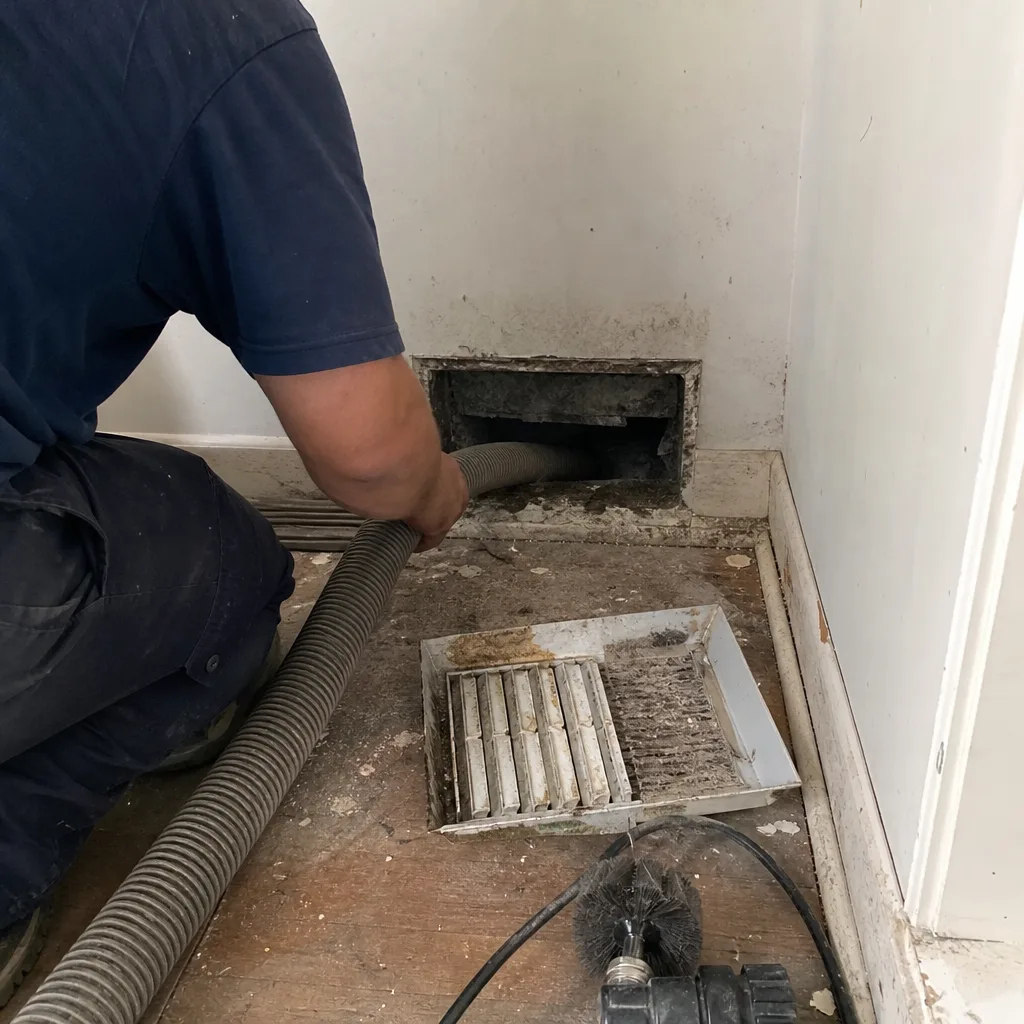 Before
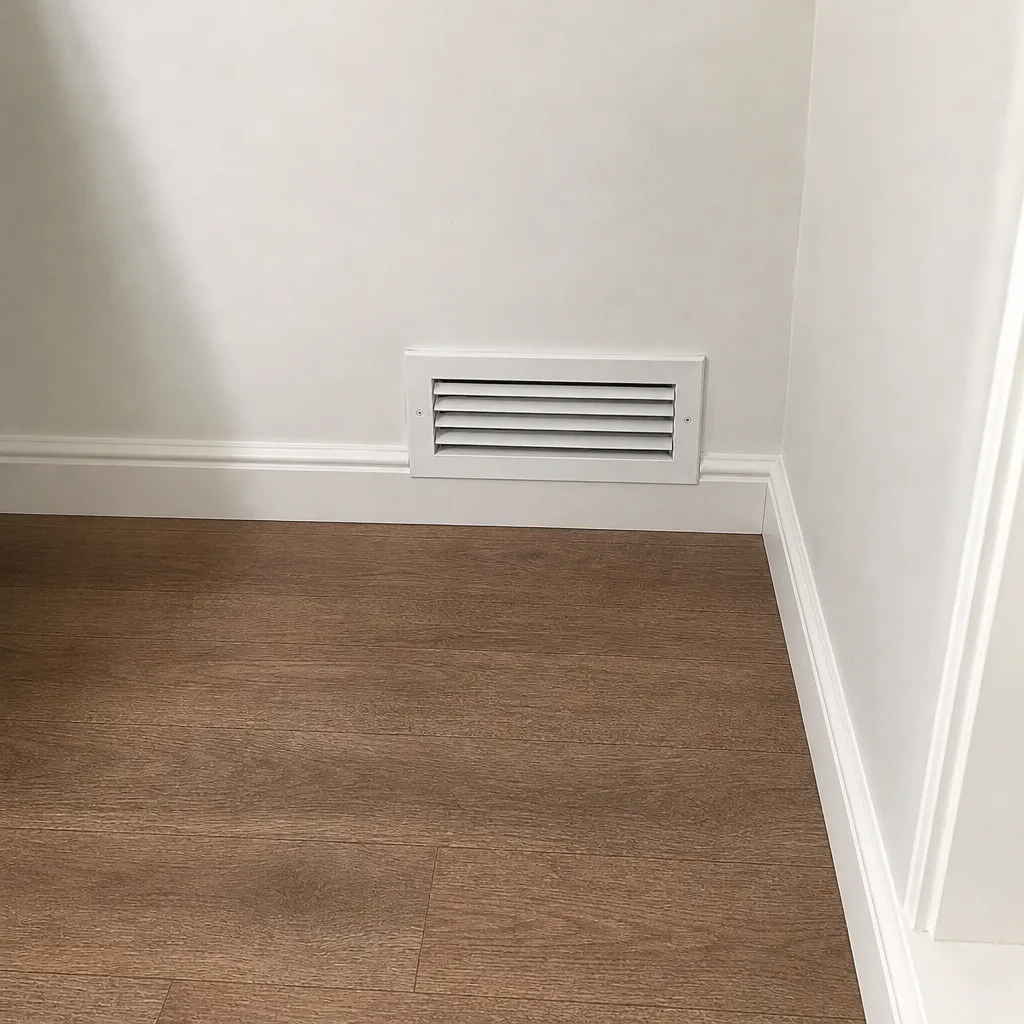 After
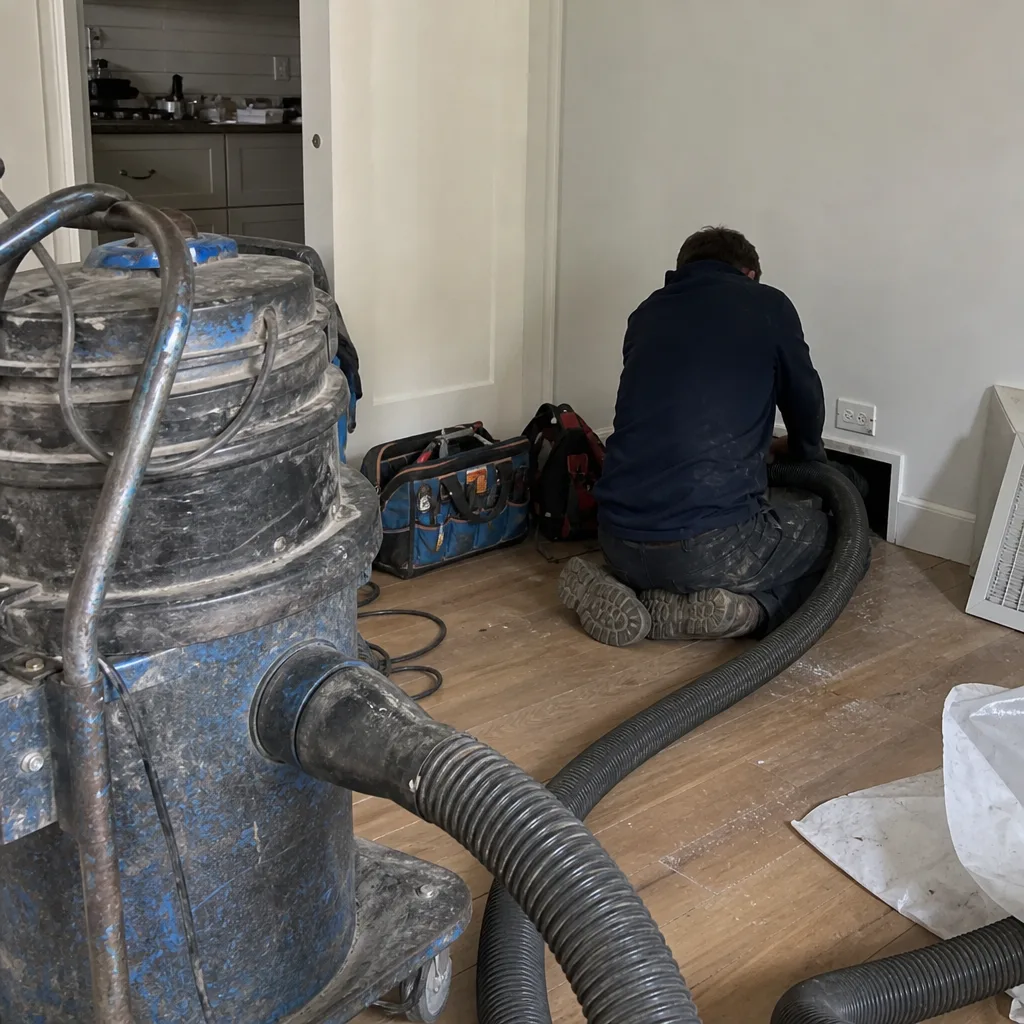 Before
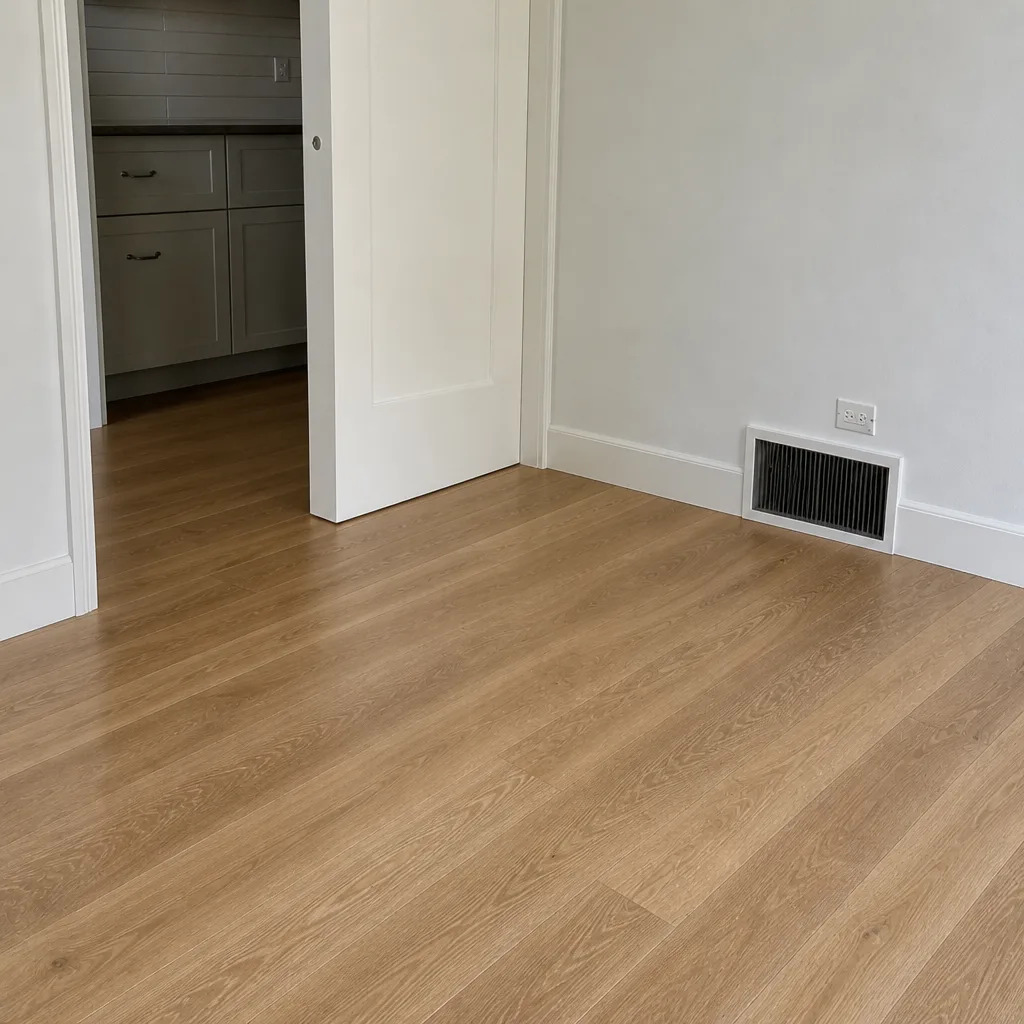 After
 Before
 After
When to Call a Professional
Call a professional when you can smell the system, when you can see dust building on the registers, when a renovation has just wrapped, when cooling is uneven or the electric bill jumped, when the dryer is taking too long to dry a load, or when you’re walking through a rental turnover and want documented cleaning with photos. Also call if a prior cleaning produced no documentation at all – you may be looking at a re-do. Anything involving the air handler, the coil, or attic and crawlspace ductwork is a trained-trade job; those areas hold real risks from heat, falls, and electrical components, and ductwork repairs done poorly make matters worse. Charleston Duct Cleaning offers free estimates in Charleston – call (888) 274-9947. We answer 24/7. Fast dispatch from 7am to 7pm, Sunday through Friday. Estimates are free, and the written estimate sets the final price before any work begins.
Frequently Asked Questions
Most whole-system cleanings in Charleston land in the typical range for a full professional job, and the written estimate sets the final price. We quote per system, not per vent, so the price is clear before any work starts. Call (888) 274-9947 for an exact quote – estimates are free.
Because they’re usually quoting a different job – a shop vac and a walkthrough without containment, negative pressure, or air scrubbers. A cheap quote typically excludes the air handler, skips the plenum, and produces no photos, which is why customers end up calling again after the first job. Cleaning is defined by what’s removed, not by how fast the crew left. Call (888) 274-9947 for a scope-based estimate on your actual system.
Before-and-after photos of your own ducts, a written scope, and diagnostic findings are the record. Legitimate documentation lets you verify the job without having been on-site. If a company won’t produce photos and a scope, treat that as the answer. Call (888) 274-9947 to book a documented cleaning – estimates are free.
Often enough that Charleston’s long cooling season pushes most homes toward the earlier end of the every-few-years range, and sooner if there’s a trigger like a renovation or musty airflow. Base the decision on what your system shows you rather than a fixed calendar. Call (888) 274-9947 for a diagnostic walkthrough – estimates are free.
Yes, and sooner than usual. Sheetrock dust, sawdust, and construction debris settle into supply and return runs during a renovation, and once the project ends the system starts recirculating it. A cleaning paired with a diagnostic check for leaks is the right closeout step. Call (888) 274-9947 for a free estimate.
Both. Duct repair is a core service, not a referral, so leaks, disconnected flex joints, and damaged runs found during a cleaning can be repaired in the same engagement. That’s also why we recommend cleaning and inspection together – the diagnosis is half the value. Call (888) 274-9947 for a free estimate on your specific system.
The Bottom Line
Air duct cleaning in Charleston is defined by process, not by price or by a verbal all-clear. Negative pressure, containment, contact cleaning with simultaneous HEPA extraction, air handler access, and before-and-after documentation are what separate a real cleaning from a disturbance. Charleston’s long cooling season, humid summers, and mixed slab-on-grade and crawlspace construction mean the contamination you’re dealing with is often moisture-driven and frequently tied to a duct leak – which is why we repair what we find rather than hand off a punch list. Cleaning removes what’s there; repair keeps it from coming back. If you want the job done once, with professional-grade equipment and photos of your own ducts, that’s what we do.
Contact
Charleston Duct Cleaning is a focused air-system specialist with three services – air duct cleaning, dryer vent cleaning, and air duct repair – handled by one trade, with professional-grade Rotobrush and Nikro systems and Abatement Technologies containment as part of the standard process. Licensed professionals, one flat price per system agreed before work starts, and before-and-after photos of your own ducts. To book a free estimate and find out what your system actually needs, call (888) 274-9947. We answer 24/7. Fast dispatch from 7am to 7pm, Sunday through Friday. Our technicians have up to 15 years of experience, and the written estimate sets the final price before any work begins. For everything else, start at Charleston Duct Cleaning.
Written by the team at Charleston Duct Cleaning.