
Last updated November 15, 2026
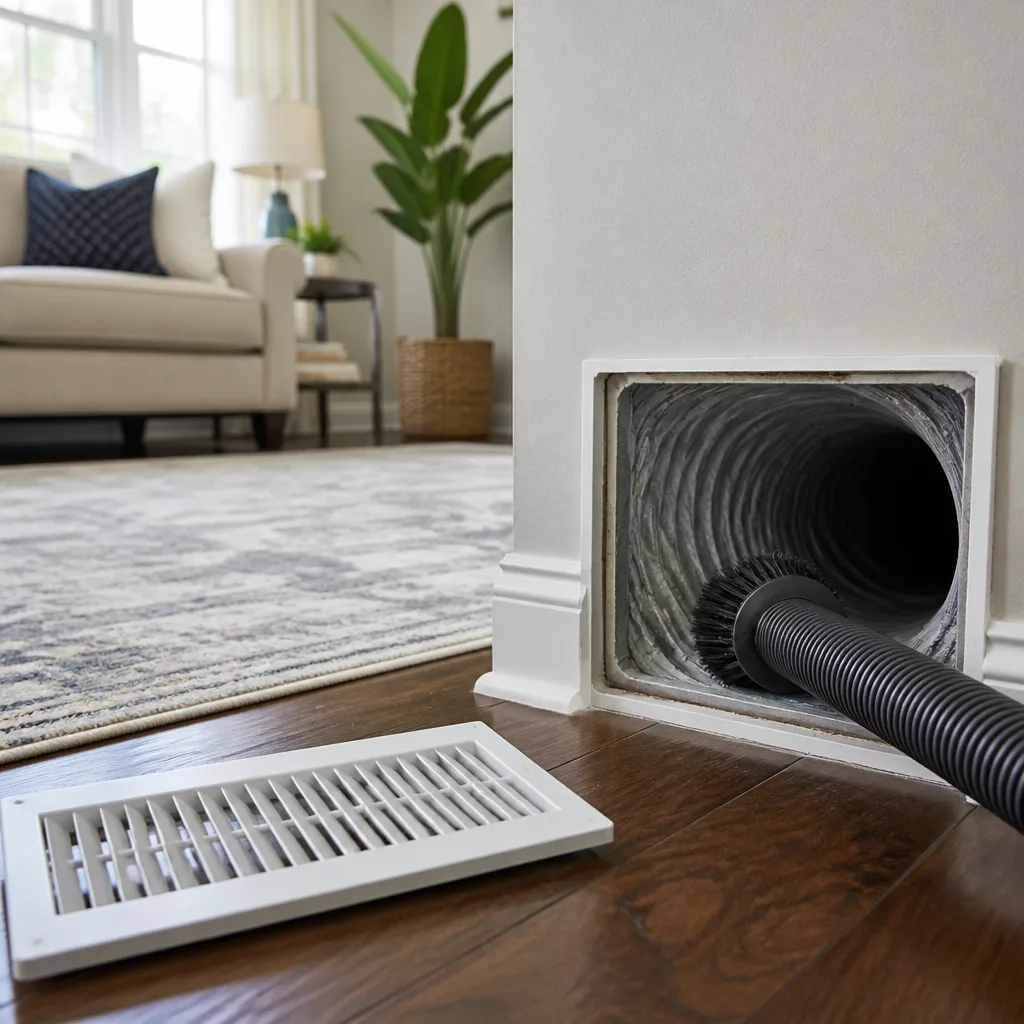 Whole-home duct cleaning
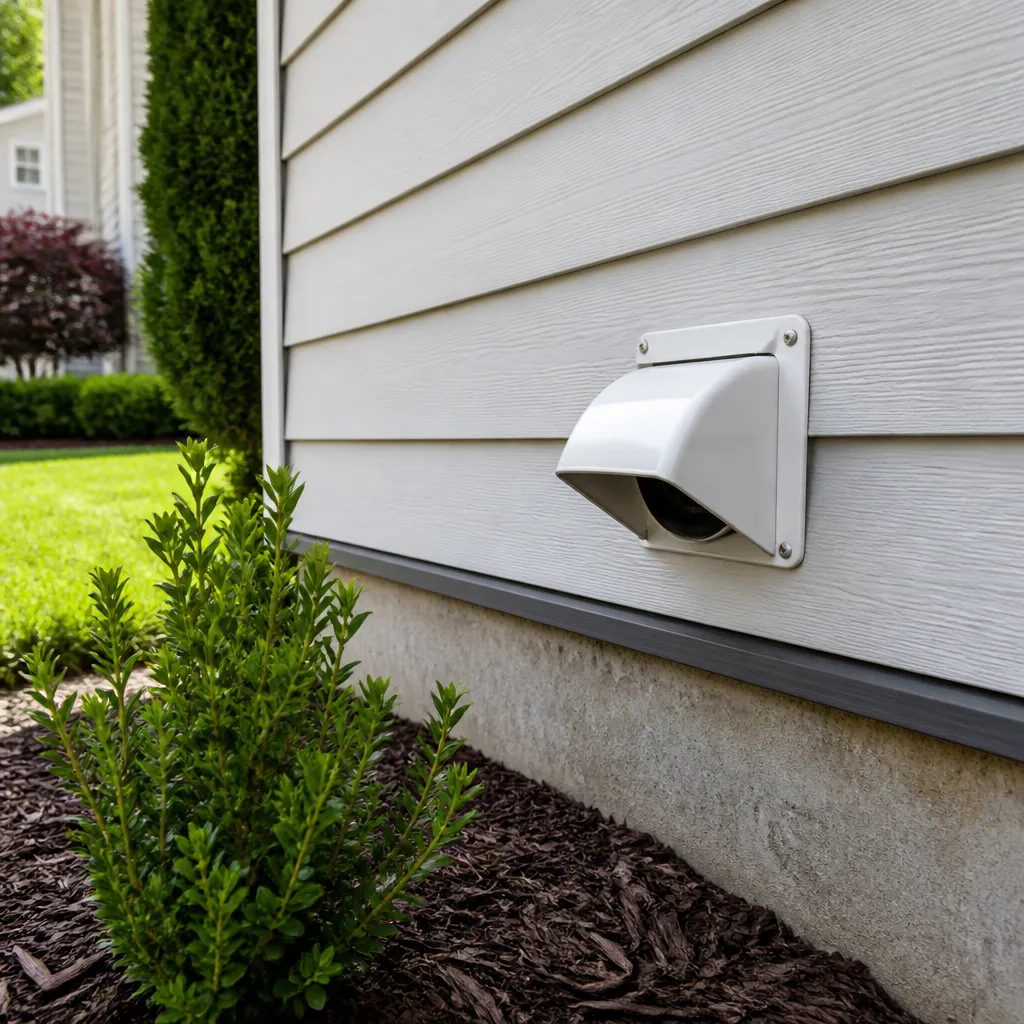 Dryer vent cleaning
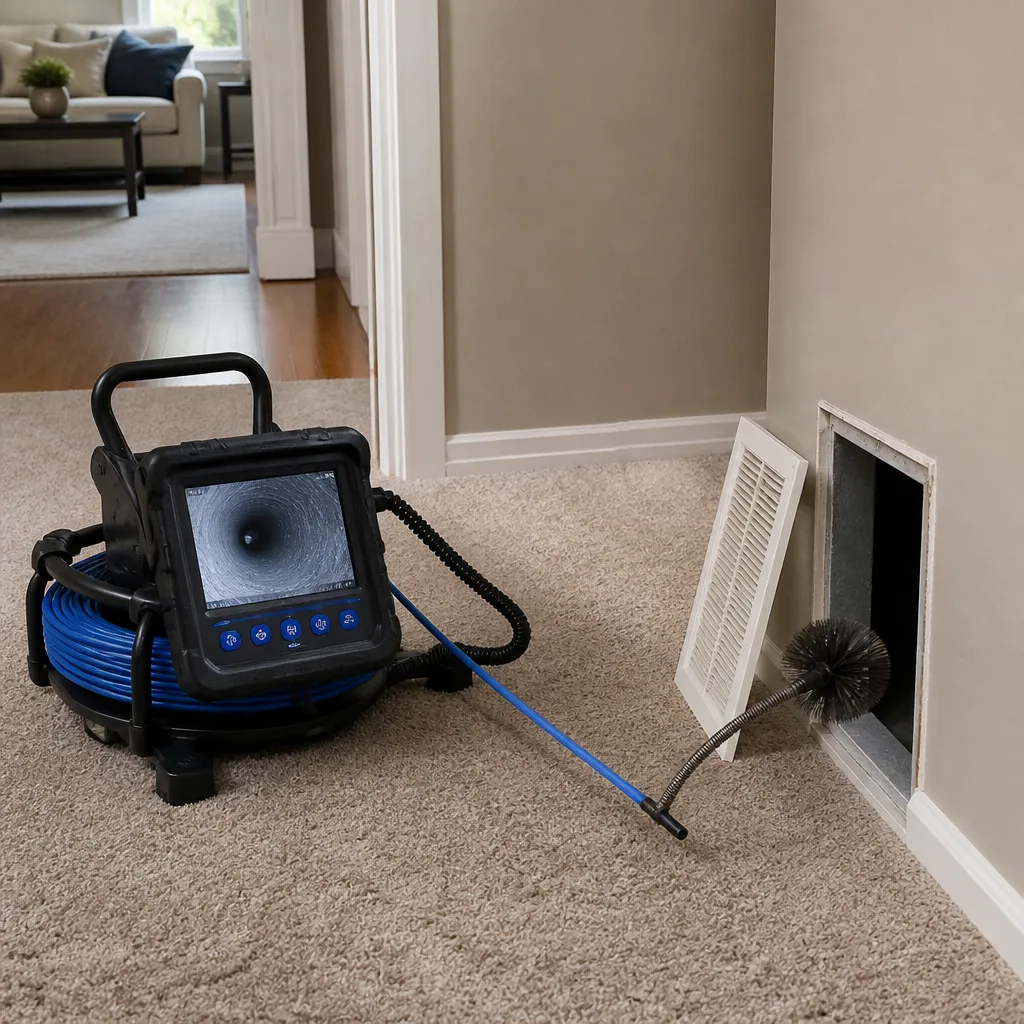 Camera inspection
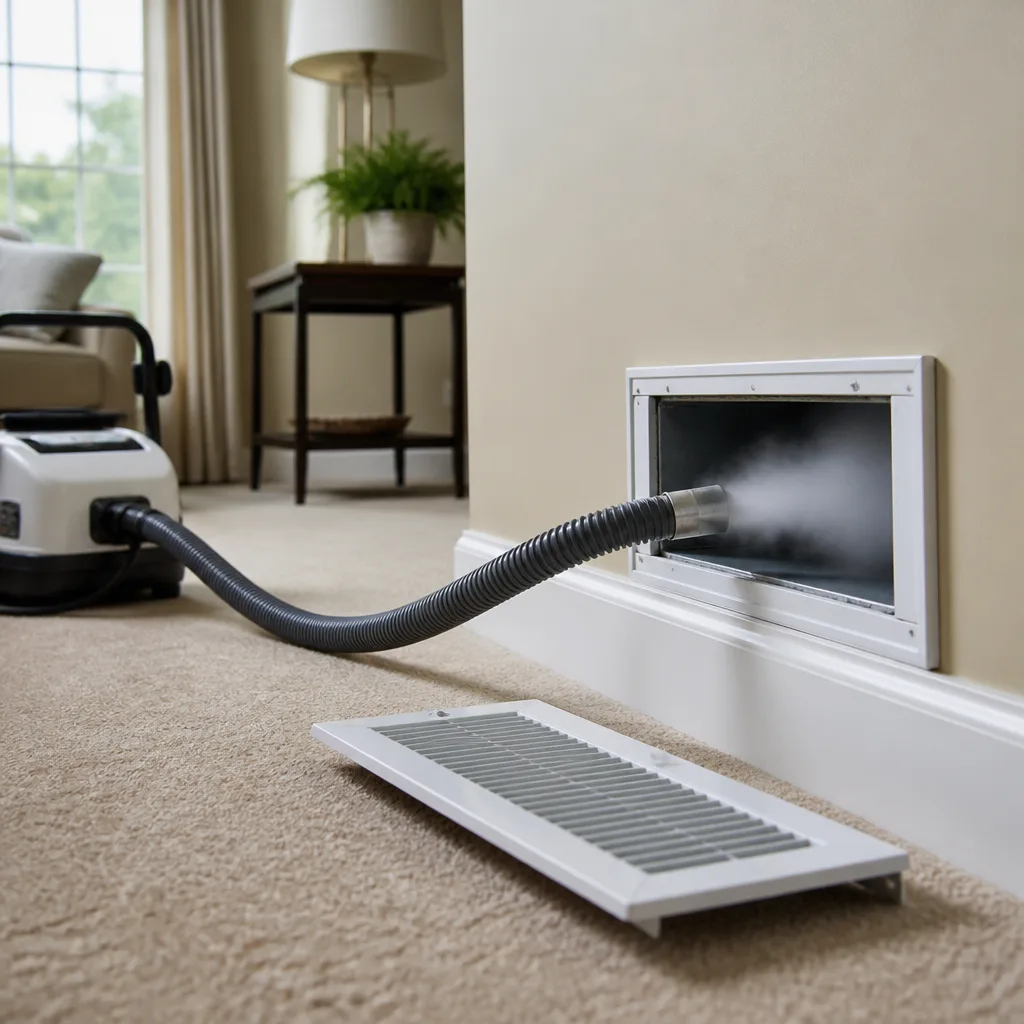 Sanitizing & deodorizing
Whole-system duct and dryer vent check with before-and-after photos - you see exactly what came out of your vents
That "$99 whole-house special" is a bait ad - the real number appears once they are in your hallway, or the "clean" is a shop-vac at the register. We photograph the inside of your ducts before and after instead.
DIY vs Professional Air Duct Cleaning: The Charleston Homeowner’s Decision Guide
Most homeowners who decide to clean their own ductwork believe the job went fine. The registers look cleaner, the vacuum bag filled up, and nothing seems worse. That’s the trap. A household vacuum and a long brush don’t remove contamination so much as they mobilize it: loosening dust, dander and debris inside the system and redistributing it into your living space and deeper into the duct runs. The question isn’t really whether you’re capable of scrubbing a duct. It’s whether you can hold the debris in place while you do it. In a Charleston home where humidity stays high most of the year, that difference matters more than it would somewhere dry. This guide explains the physics behind that claim, what you can safely do yourself, where DIY backfires, and how to weigh the real cost of both paths.
Quick Answer
Professional air duct cleaning is the right call when the system has visible debris, contamination, damaged duct sections, or a known source like a recent renovation. DIY register and grille cleaning is fine for routine surface upkeep, but a household shop vac cannot create the negative pressure needed to safely extract debris from the duct runs without spreading it through the house. In short: maintain the visible parts yourself, and hire a trained specialist for anything inside the system itself.
Styles & brands we work with
- Whole-home duct cleaning
- Dryer vent cleaning
- Camera inspection
- Sanitizing & deodorizing
Table of Contents
- The Containment Physics: Why the Method Matters More Than the Effort
- What Homeowners Can Safely Do Themselves
- When DIY Makes the Problem Worse
- Total Cost Analysis: DIY vs Professional
- Charleston’s Humidity and the Resettling Problem
- What Professional Equipment Actually Does
- Signs Your Ducts Need More Than a DIY Pass
- Common Mistakes to Avoid
The Containment Physics: Why the Method Matters More Than the Effort
Air duct cleaning isn’t a scrubbing task. It’s a containment task. The moment you loosen debris inside a duct run, that material has three possible destinations: out the register into your room, deeper into the system toward the air handler, or into a sealed extraction container. Without containment, the first two are what you get.
Professional duct cleaning works on a simple principle. The duct system is put under negative pressure while mechanical agitation breaks debris loose from the duct walls. Because the pressure inside the ducts is lower than the pressure in the room, air and debris flow toward the vacuum rig rather than into the living space. The work is still physical, but the environment around it is controlled. Every loose particle has somewhere safe to go.
The equipment categories that achieve this are not consumer-grade. Rotobrush contact-cleaning systems use rotating brushes to agitate the duct walls while a simultaneous vacuum pulls material away. Nikro HEPA vacuum rigs provide the high-volume negative pressure that pulls the loosened particulate toward a housed filter. Both are tool categories that show up in commercial cleaning and restoration-grade work, not in a bucket of household products.
There’s a widely cited working figure in the trade for the airflow needed to hold a residential duct system in proper negative pressure during cleaning: the extraction rig needs to move substantially more air than a household shop vac, often somewhere in the range of several hundred cubic feet per minute depending on duct size. A shop vac moving around 100 to 200 CFM doesn’t come close in larger systems. The result isn’t extraction. It’s a stir.
Abatement Technologies air scrubbers add a second layer. While the cleaning happens, these units cycle air through HEPA filtration in the work area, capturing anything that escapes the duct system before it settles in your furniture, curtains or HVAC equipment. That combination, mechanical agitation, high-volume negative pressure, and active air scrubbing, is the actual method. Everything else is preparation and inspection.
What Homeowners Can Safely Do Themselves
We don’t think homeowners should be locked out of their own HVAC system. There’s plenty of routine upkeep that’s safe, useful and genuinely extends the life of your ductwork. The rule of thumb is simple: anything you can see and reach without opening the duct system is fair game. Anything behind a grille, inside a run, or attached to the air handler belongs to a trained specialist.
Here’s what we consider legitimate DIY maintenance:
- Register and grille cleaning. Remove the supply registers and return grilles, wash them in a utility sink with dish soap and warm water, dry them fully, and put them back. This removes surface dust before it moves into the ducts.
- Return grille filter changes. Most return grilles hold a standard filter that should be replaced on the schedule your filter manufacturer recommends. A clogged filter forces the system to pull harder and can disturb settled debris in the ducts.
- Visible dust around the air handler. Wipe down the accessible exterior panels of the air handler and any exposed ductwork with a damp cloth. Do not open panels or reach inside.
- Filter upgrades. If you’re interested in higher-MERV filtration, this is a decision worth researching. Honeywell and Aprilaire both make filtration and IAQ products that integrate with common residential HVAC systems. Get advice before you change filter ratings, since high-MERV filters can strain some blowers.
- Keeping rooms dry. Running a dehumidifier in damp spaces and fixing minor leaks early keeps the environment inside your ducts less hospitable to biological growth.
What you can’t safely do is open a duct run, insert a shop vac hose, and try to clean the interior. A household vac doesn’t have the airflow or filtration to hold what it loosens, and a stiff brush on a flexible rod can damage flex duct, dislodge insulation or nick the interior coating that keeps the duct smooth. That’s not a skill problem. It’s an equipment problem.
When DIY Makes the Problem Worse
There are specific situations where the urge to do it yourself escalates a manageable issue into a real one. We’ve seen all three of these play out in Charleston-area homes, and they share a common thread: the problem the homeowner was trying to solve was already airborne.
- Post-renovation dust. Drywall dust, sawdust and construction debris settle throughout the duct system during a remodel. A shop vac pulled through a register lifts that dust into the air, where it drifts into every room and settles into fresh paint, carpet and upholstery. Professional post-renovation cleaning relies on negative pressure and HEPA filtration specifically because that dust is fine, light and easy to mobilize.
- Suspected mold growth. If you can smell a musty odor when the system runs, that’s a signal worth investigating before you touch anything. Disturbing mold-contaminated surfaces without containment spreads spores throughout the home and into the HVAC system itself. Professional service uses air scrubbers and contained extraction so the spores leave inside a filter, not inside your living room.
- Damaged flex duct. Flex duct is common in Charleston homes and in crawl-space or attic runs. It tears easily. A brush on a rod can puncture or tear the liner, and a shop vac can collapse a sagging section. Once flex duct is compromised, it leaks conditioned air into unconditioned spaces and pulls debris in from wherever it runs. Duct repair becomes a much larger job than duct cleaning.
There’s a fourth, subtler scenario. If your system has never been cleaned and you’re dealing with years of accumulated debris, a DIY attempt often creates visible dust in the home without removing the source. The homeowner concludes the system was fine when the opposite is true.
Total Cost Analysis: DIY vs Professional
The cost comparison most homeowners make is against the wrong numbers. A DIY cleaning isn’t free. Rental equipment for duct cleaning, in the rare cases where a local rental yard stocks it, runs to a daily rate, and the equipment on offer is limited: usually a shop vac with a long hose and a brush kit, not a rig built for ductwork. Then there’s your time, which is the largest hidden cost. Most homeowners underestimate how long a proper clean takes.
The honest way to weigh the two paths is to compare what you get for the money, not just the money itself.
- Rental equipment. A day rate for a general-purpose vacuum and hose. Doesn’t include HEPA filtration, containment, brushes sized for residential ductwork, or air scrubbing. Rated for shop use, not ductwork.
- Your time. Typically a full day or more for a first-time attempt, including setup, moving furniture, dealing with the register and grille removal, and cleanup. Multiply that by what your weekday hours are worth to you.
- Risk of a revisit. If the result doesn’t hold up, or if a homeowner discovers contamination that was there all along, they end up calling a professional anyway. That’s the full DIY cost plus the professional cost, and the delay means more debris has time to accumulate.
- Professional service. Priced as a flat, written estimate per system before work starts, not per vent. Includes inspection, containment, extraction, air scrubbing and, where relevant, duct repair in the same visit.
For a complete picture of what a proper clean involves and how it’s priced in the local market, see our air duct cleaning overview. We’ve found that homeowners who price the two paths honestly usually discover the gap is smaller than they expected, and the DIY plan asks them to accept a much larger uncertainty.
Charleston’s Humidity and the Resettling Problem
Air duct cleaning matters everywhere. In Charleston, it matters more for a specific reason: humidity. Charleston’s summers are long, warm and humid, and that condition is active inside the ductwork long after the outdoor air feels comfortable again. Condensation on cool duct surfaces in conditioning season, moisture from crawl spaces that vent upward, and interior humidity from cooking and bathing all keep duct interiors mild. If you disturb organic contamination, fungal spores, dust mites, dander, and it resettles elsewhere in the system, that environment has the moisture to support regrowth.
In a dry climate, a poorly contained DIY attempt often means a cleaning that didn’t accomplish much. In Charleston, the same attempt can mean the contamination comes back. What was distributed to new surfaces now has a microenvironment that supports it. That’s why we treat containment as a non-negotiable part of the process locally, not as an optional feature. The same reasoning applies to moisture sources: a small sink leak near the air handler, a duct run through a damp crawl space, or a dryer vent with a kink in it that traps lint and moisture.
It’s also why our approach layers filtration and scrubbing on top of extraction. The Abatement Technologies air scrubbers pull air through HEPA filtration while the work is happening, capturing anything that brief pressure fluctuations might release before it has a chance to settle in Charleston’s warm indoor air. And it’s why we pay attention to the whole system, not just the ducts. Duct repair, proper dryer vent routing, and consideration of filtration upgrades via Honeywell or Aprilaire products all reduce the reservoir of moisture and debris the system has to carry.
For local context, our Charleston service page covers how we approach local homes and what to expect from an appointment.
What Professional Equipment Actually Does
Equipment is where the DIY vs professional question resolves. This isn’t about who owns the bigger machine. It’s about what a piece of equipment makes possible. Here’s how a professional cleaning setup breaks down in practical terms.
- Inspection first. Before any cleaning, the technician inspects accessible duct runs, the air handler, and the return plenum. This step determines the cleaning method and flags any duct damage that needs repair rather than cleaning.
- Zone isolation. Registers and returns are sealed, and the system is split into work zones so that debris in one run can’t migrate to another.
- Negative pressure. A Nikro HEPA vacuum rig is connected to the trunk or main return. It holds the entire duct system under negative pressure so that every loosened particle has a one-way path out.
- Contact cleaning. A Rotobrush contact-cleaning system feeds a rotating brush through each run while a simultaneous vacuum pulls loosened debris toward the extraction point. The brush does the work; the vacuum does the containment.
- Air scrubbing. Abatement Technologies air scrubbers run in the work area, HEPA-filtering ambient air throughout the cleaning.
- Repair assessment. Any damaged flex duct, separated joint or crushed run is identified during inspection and included in the scope. We repair what we find, in the same engagement, rather than passing you off to someone else.
- Verification. The technician confirms the extraction rig is holding pressure and that the system is cleaned through the full run, not just at the register end.
The difference between this and a shop vac isn’t horsepower. It’s the pressure differential, the HEPA filtration, and the containment zone. Any one of those is hard to replicate at home. All three together aren’t possible with consumer equipment. That’s what people mean when they talk about professional-grade equipment, not a shop vac and a coupon.
Signs Your Ducts Need More Than a DIY Pass
Not every home needs professional cleaning. If your system is running well, the filters are changed on schedule and you clean your registers regularly, you may be fine for years. Here’s where the line sits. If you recognize any of these, the scope is beyond what DIY can handle safely:
- Visible dust puffing out of registers when the system starts, or dark streaks around the registers on the wall or ceiling.
- A musty or stale smell when the HVAC runs, especially at the start of the cooling season.
- Recent renovation or drywall work anywhere in the home.
- Water damage, a leak near the air handler, or a damp crawl space under the duct runs.
- Pest activity. Rodents and insects leave droppings and nesting material in ductwork that require HEPA containment to remove safely.
- Uneven airflow between rooms, or a room that never gets properly warm or cool.
- A dryer taking noticeably longer than it used to, which points to lint buildup in the vent run.
Two of those scenarios, dryer performance and duct damage, point to services beyond cleaning. If your dryer is the issue, our dryer vent cleaning page explains what’s involved and why the vent run and the ducts are treated as separate concerns. If you can see or suspect damaged duct runs, that’s a repair before cleaning, not after. Cleaning a torn flex duct doesn’t fix the leak. It just pulls more debris in from wherever the duct is drawing air.
Not sure which category you’re in? The simplest next step is an inspection. There’s no good way to know what’s inside your duct system from the outside.
Common Mistakes to Avoid
- Renting a shop vac and calling it cleaning. A shop vac loosens debris without holding it, and the fine particulate from ducts goes straight through most shop vac filters. What comes out is what you and your family breathe.
- Counting the coupon price before the job is scoped. A teaser price that turns into a much larger invoice once the technician is on site is the reason the whole industry has a reputation problem. Ask for a flat, written per-system price before you schedule.
- Cleaning without asking for photos. Any reputable service should be willing to show you before-and-after photos of your own ducts. If the process is opaque, you have no way to verify the work was actually done.
- Ignoring visible duct damage. Cleaning a torn, sagging or disconnected duct run is wasted money. In Charleston’s humid climate, a damaged flex duct also pulls damp air from a crawl space into the system, which feeds the very problem you’re trying to solve.
- Skipping the return side. Most homeowners focus on the supply registers because those are visible. The return grille and the return plenum often hold more debris than the supply side, and the room feels cleaner while the system is dirtier.
- Assuming the filter compensates for the ducts. The filter catches what the system moves; it doesn’t remove contamination that’s already settled inside. Cleaner air starts inside the ducts, not just at the filter.
- Treating dryer vent cleaning as the same job as duct cleaning. They use different tools and different methods. Scheduling both at once with a specialist who does both is often the cleanest solution. Our Charleston Duct Cleaning overview explains how we split the two.
See the difference
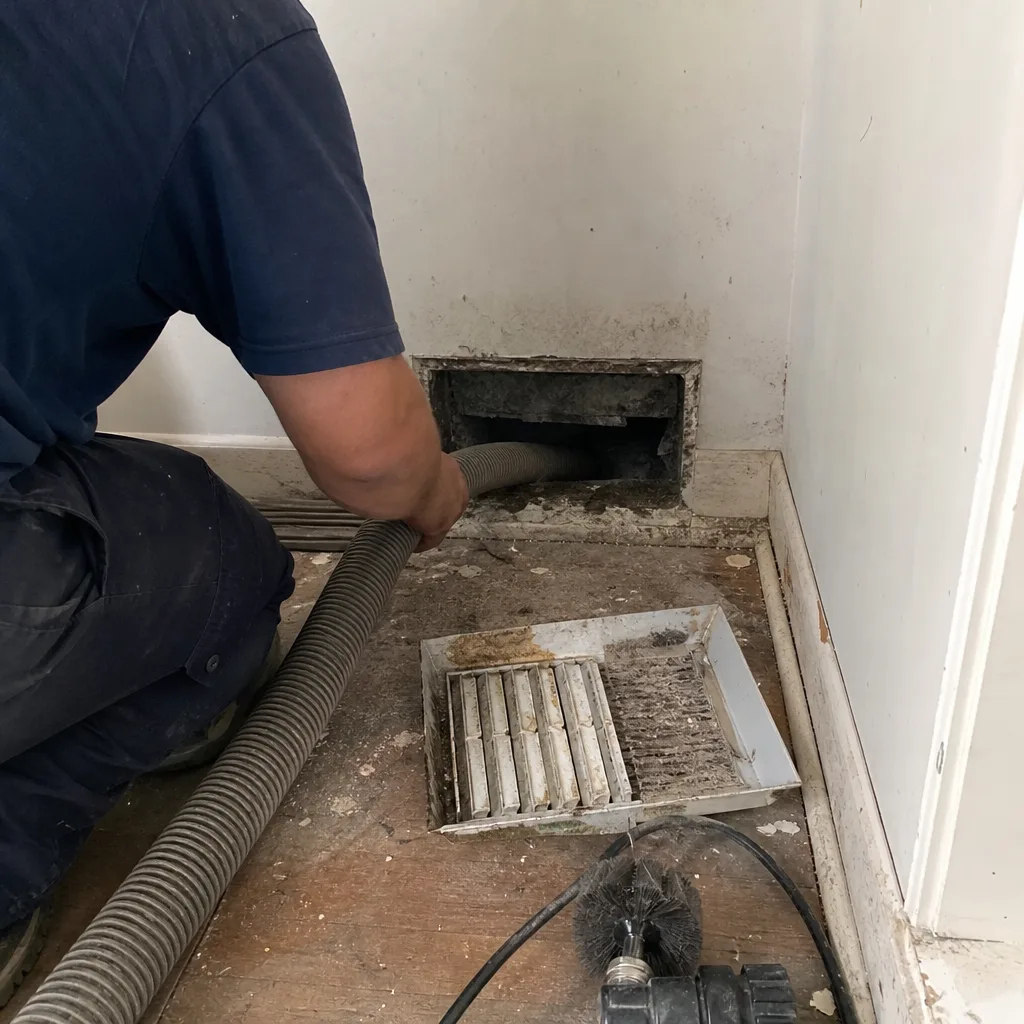 Before
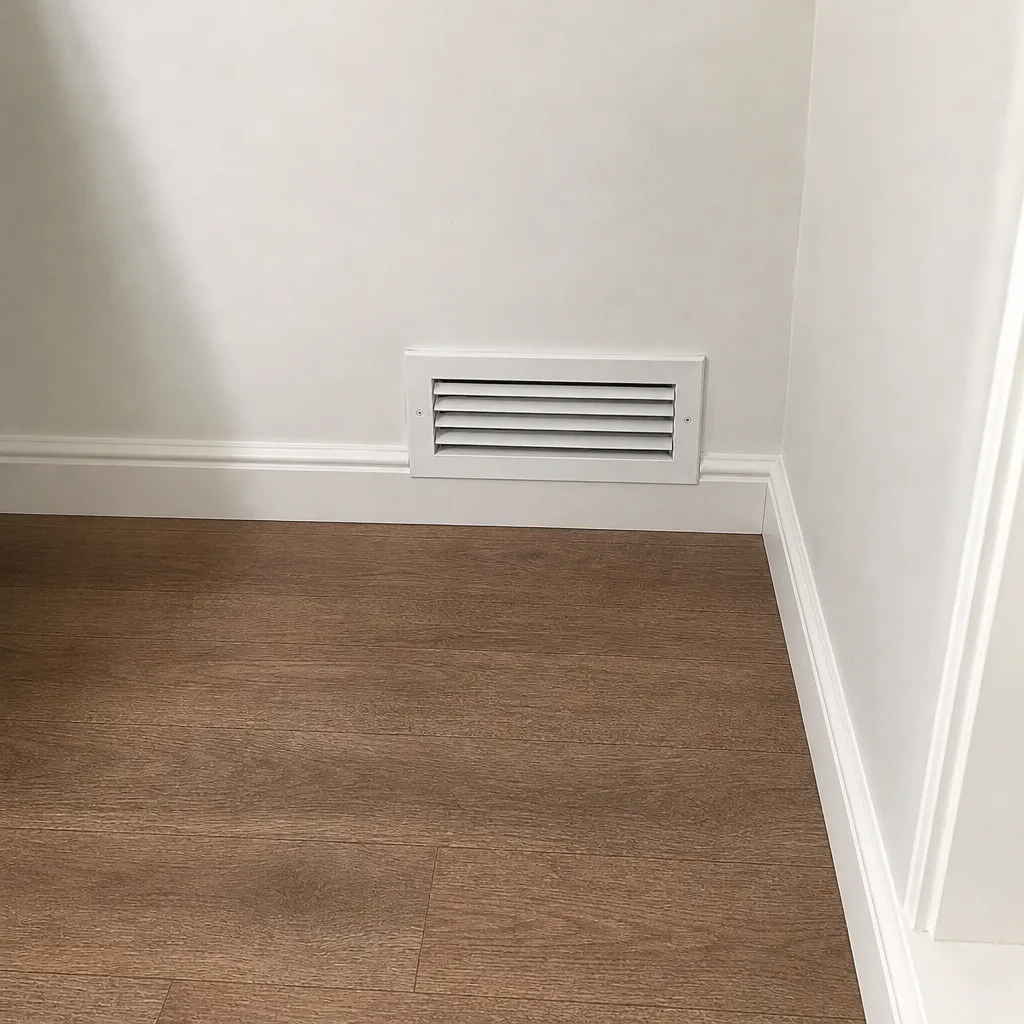 After
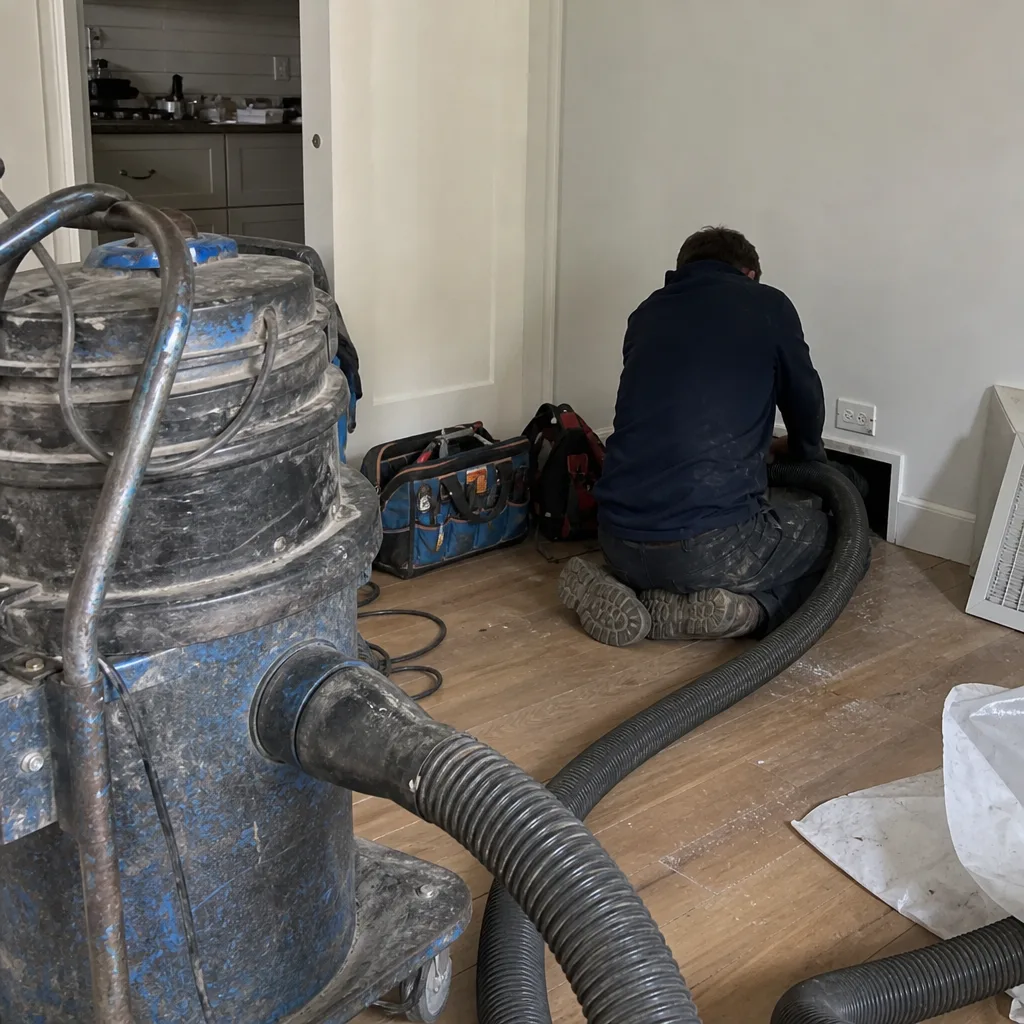 Before
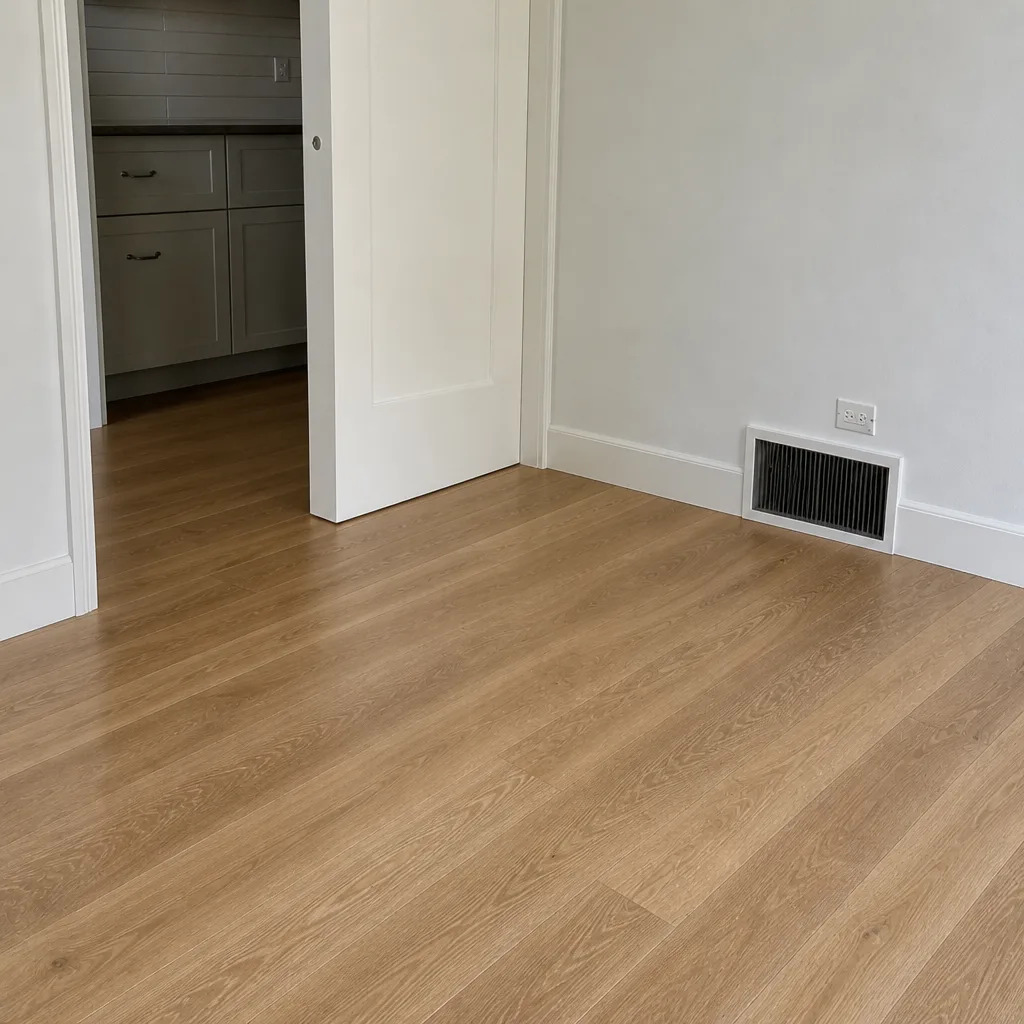 After
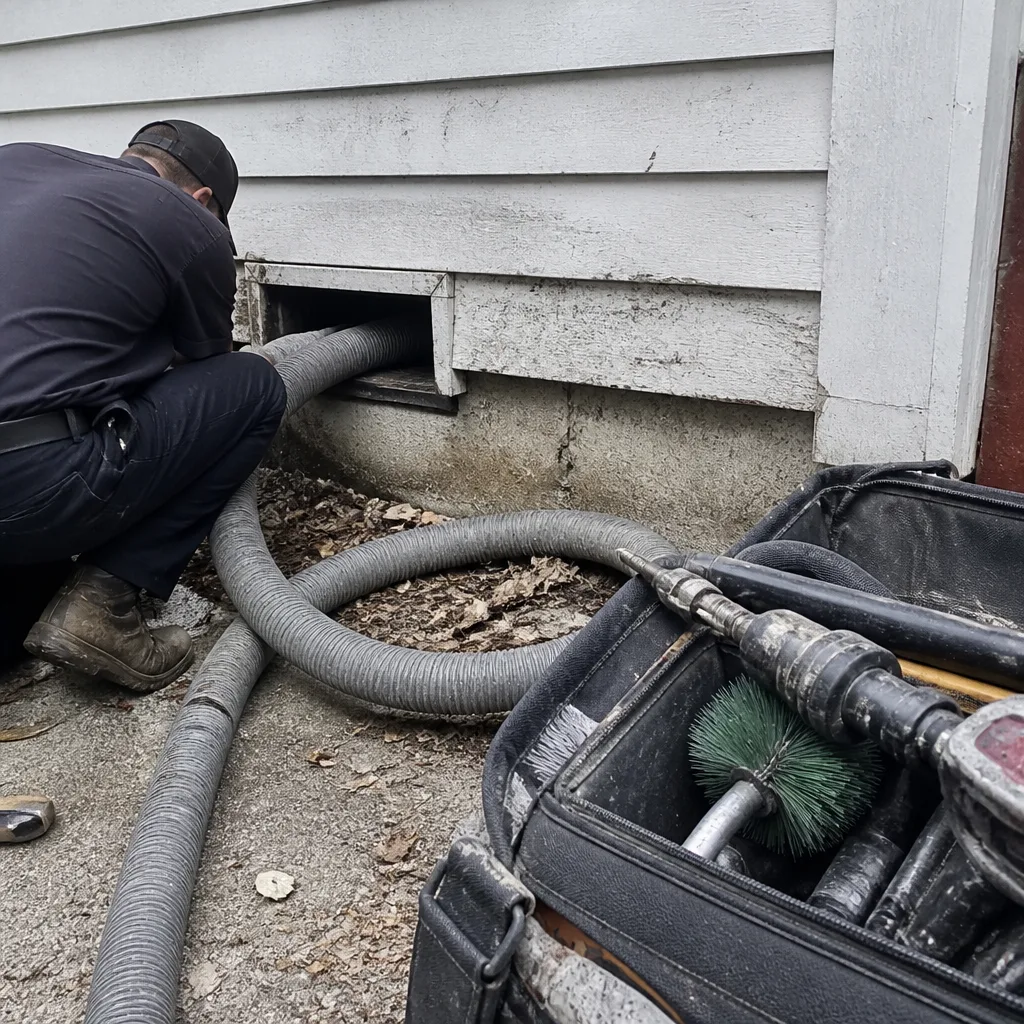 Before
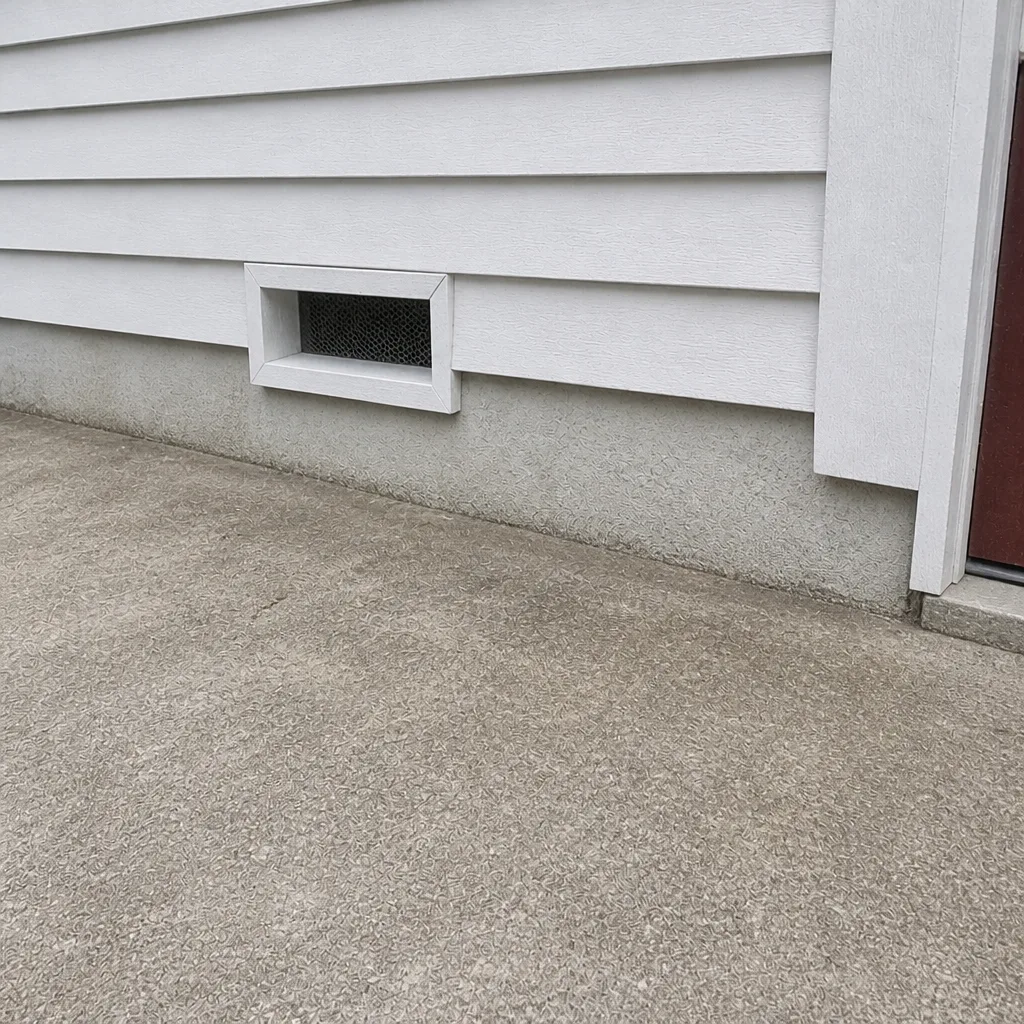 After
When to Call a Professional
Call a professional when the question moves from maintenance to diagnosis. If you’ve got a musty smell that doesn’t go away after cleaning registers, visible dust that continues to appear around your return grille, a recent renovation, a damaged duct run, a dryer taking too long to dry a normal load, or you just don’t know what’s in the system, you’re past the point where a shop vac helps. You also want a professional in if you’ve had any pest activity in the ducts or a leak anywhere near the air handler. A damaged or contaminated system is a diagnostic problem before it’s a cleaning problem, and cleaning alone won’t always solve it. Charleston Duct Cleaning offers free estimates in Charleston. Call (888) 274-9947. We answer 24/7. Fast dispatch from 7am to 7pm, Sunday through Friday.
Frequently Asked Questions
Yes, for surface-level maintenance only: cleaning registers, grilles and return filters yourself is safe and worth doing. Anything inside the duct system itself needs professional equipment because consumer vacuums can’t create the negative pressure required to contain the debris they loosen. Call (888) 274-9947 for an exact quote on a professional clean: estimates are free.
Pricing is set per system by a written estimate before work starts, not per vent or per register, and it varies with the size and condition of your system, whether duct repair is needed, and how accessible the runs are. Ask any company for the flat per-system figure before you schedule, and ask for before-and-after photos. Call (888) 274-9947 for an exact quote.
Very low quotes often don’t include containment, HEPA filtration or air scrubbing, and the equipment doing the work may be consumer-grade. The price is low because the job is smaller. The risk is that a poorly contained clean moves debris around rather than removing it. Call (888) 274-9947 for an exact quote: estimates are free.
Ask for before-and-after photos of your own ducts, and ask to see the equipment in use: a professional setup includes a HEPA vacuum rig, an agitation brush system and typically an air scrubber. If the process is invisible and the crew can’t show you the inside of the system before and after, you’re paying for something you can’t verify. Call (888) 274-9947 to schedule a clean with documented results.
There’s no universal schedule, but most systems benefit from a professional clean every few years, sooner if you’ve had a renovation, water intrusion, pest activity, or notice musty airflow. Homes near construction or with pets may benefit more often. Routine register and filter maintenance in between stretches the interval. Call (888) 274-9947 to talk through your situation: estimates are free.
Cleaning the visible lint trap and the short segment of vent behind the dryer is reasonable DIY work. The full vent run, especially a long or elbowed run, needs professional equipment because lint buildup inside the run can’t be pulled out with a household vacuum. Long dry times and repeated lint near the outdoor vent are reasons to call (888) 274-9947 for an estimate.
The Bottom Line
The DIY vs professional question isn’t really about capability. It’s about containment. A homeowner with a shop vac and a brush can loosen debris inside a duct system, but they can’t hold it in place, HEPA-filter it and extract it to a sealed container while they work. In Charleston’s humid climate, loosened debris that stays inside the system has a real environment to resettle and grow, which makes containment the difference between a cleaning and a stir. Do the register and filter maintenance yourself. Do it well and do it often. For anything inside the duct system, call a specialist with professional extraction equipment and the ability to repair what they find. Call (888) 274-9947 for a free estimate. We answer 24/7. Fast dispatch from 7am to 7pm, Sunday through Friday.
Written by the team at Charleston Duct Cleaning.