
Last updated November 15, 2026
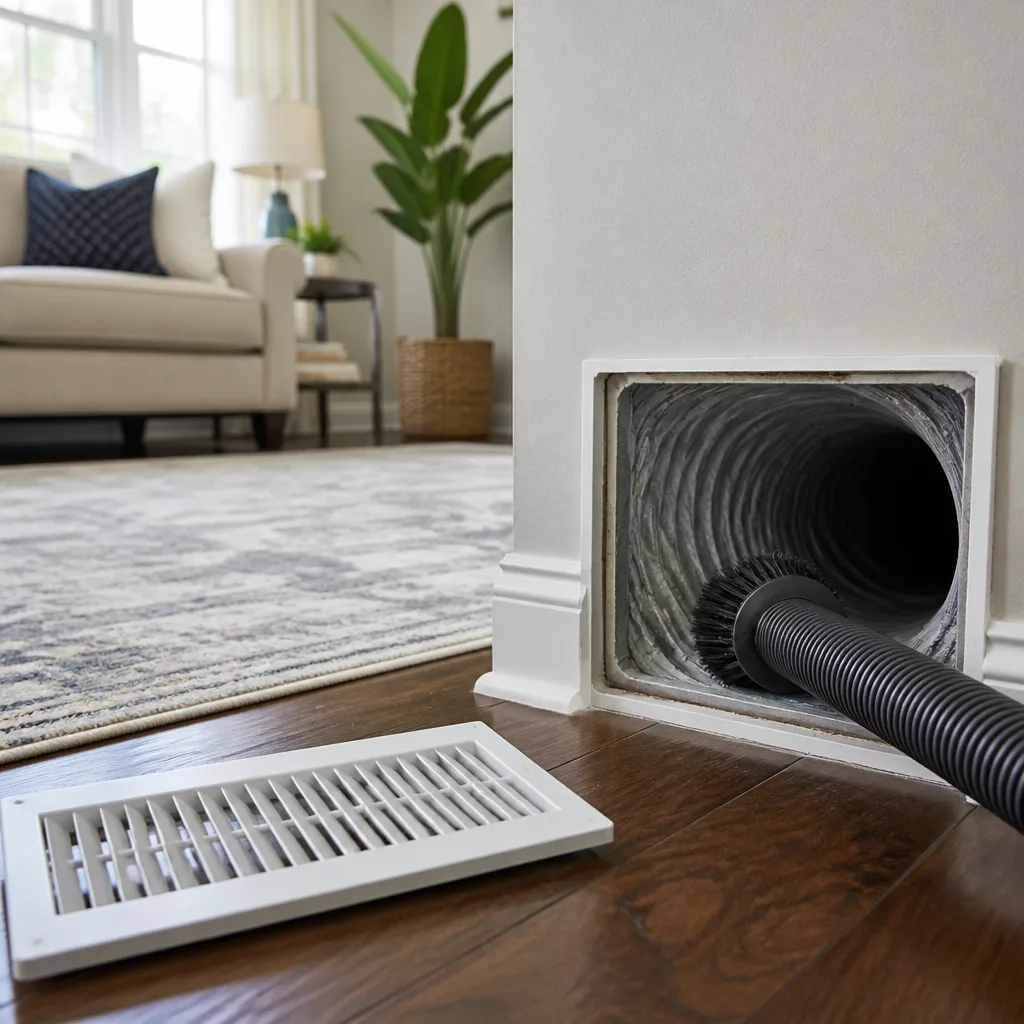 Whole-home duct cleaning
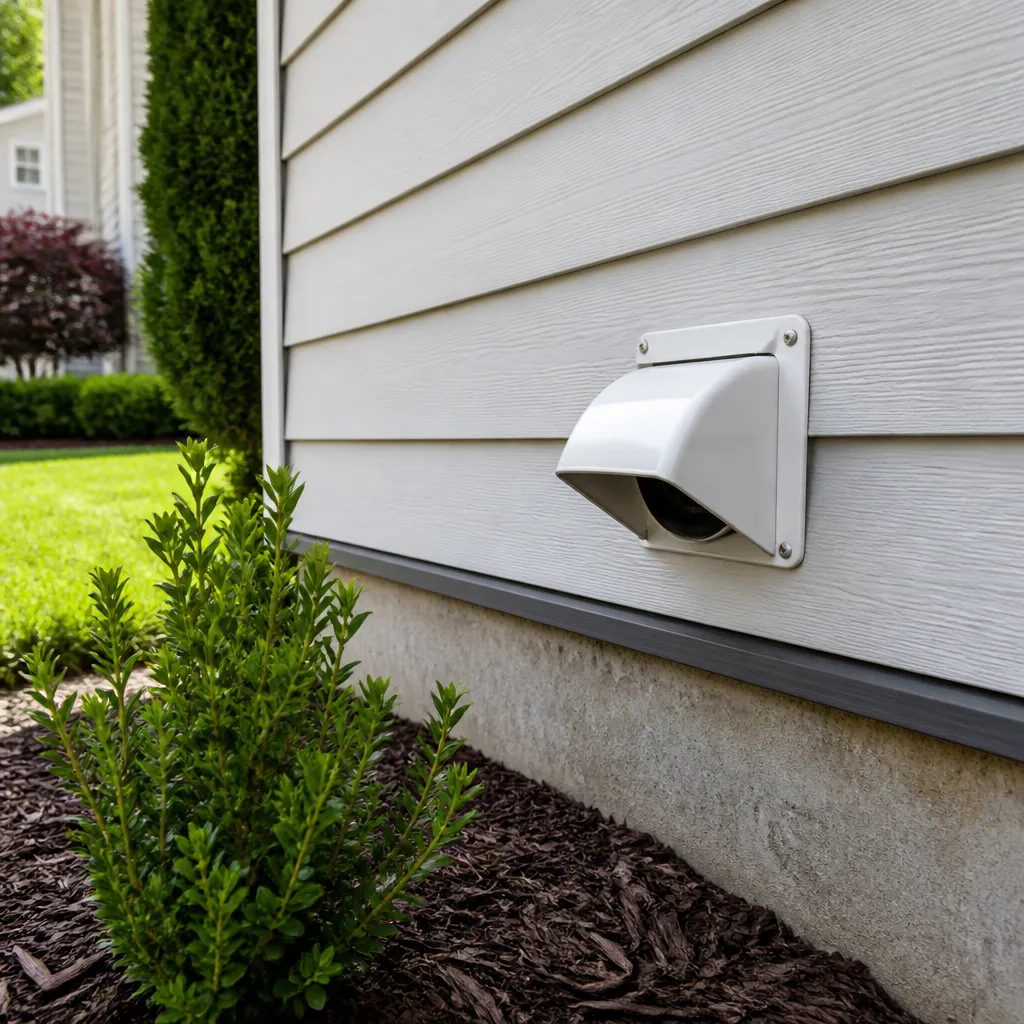 Dryer vent cleaning
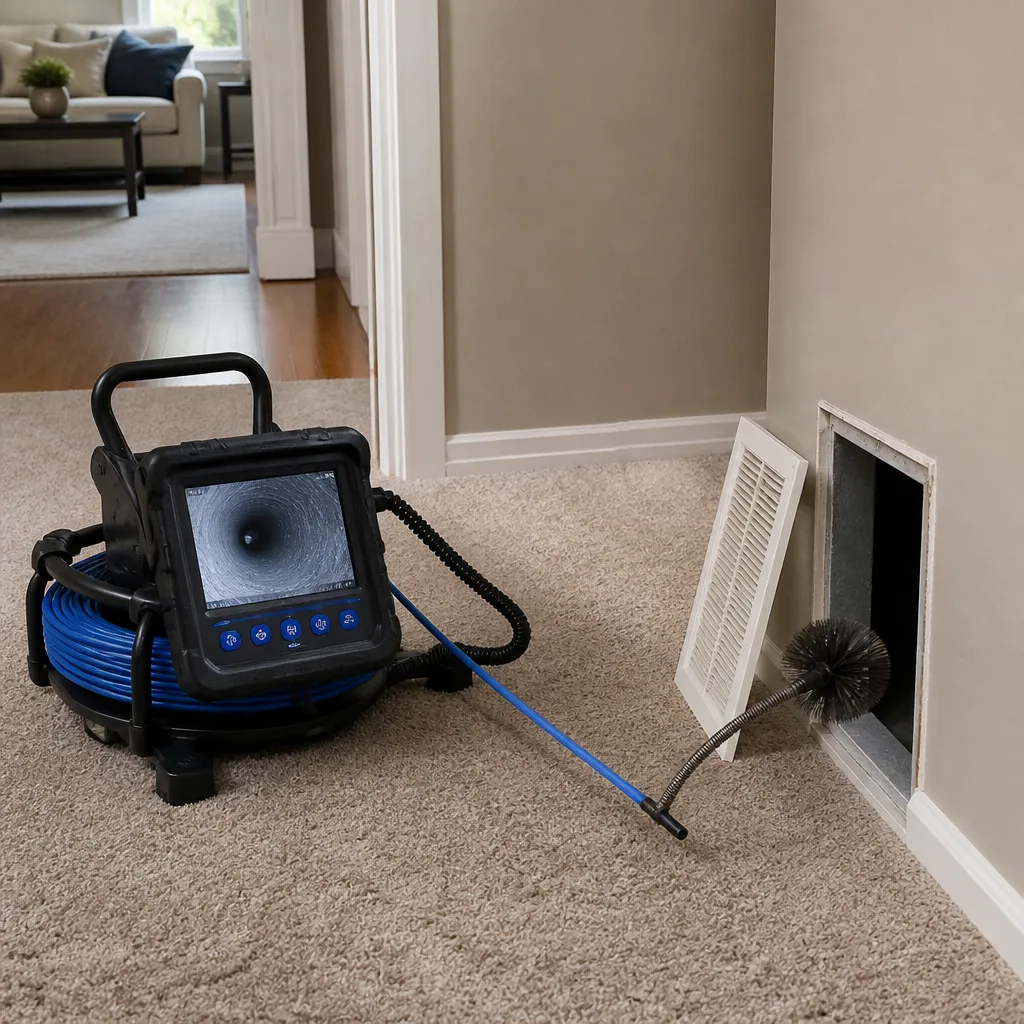 Camera inspection
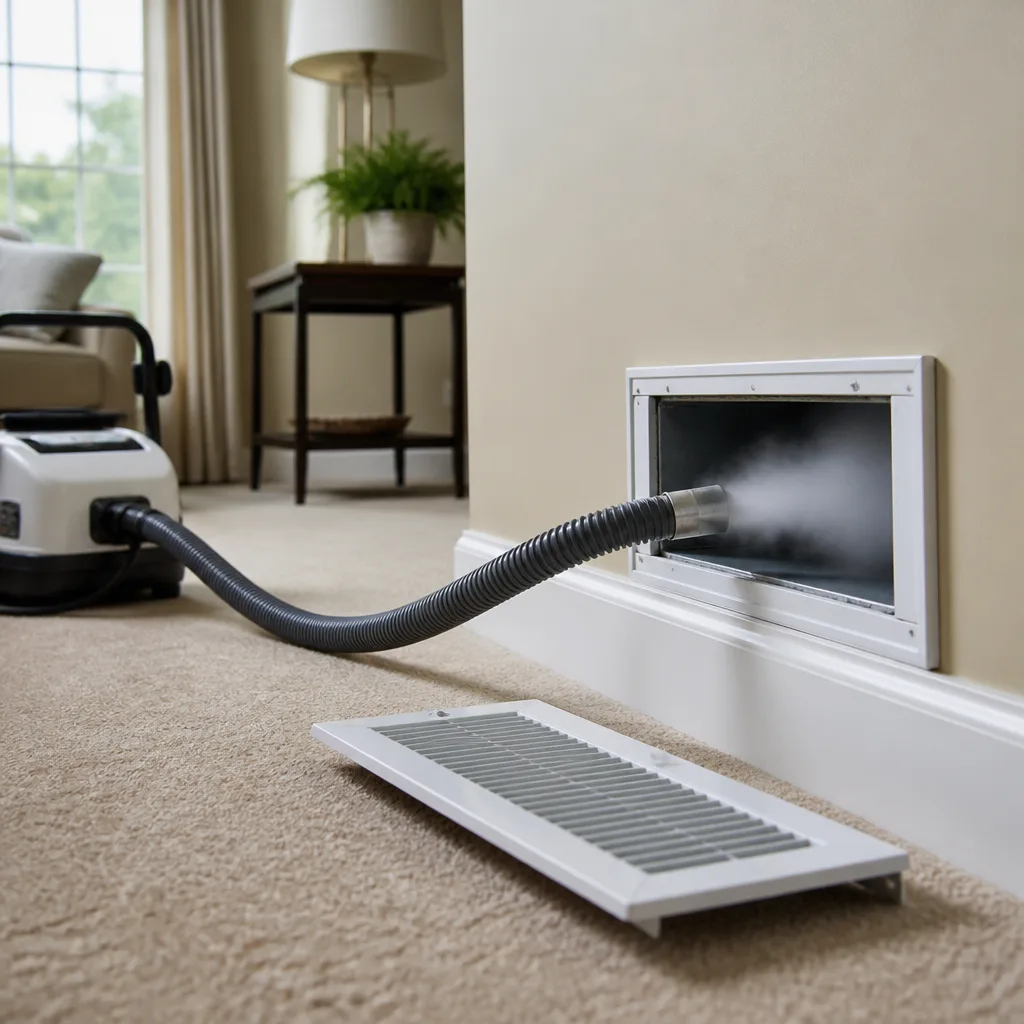 Sanitizing & deodorizing
Whole-system duct and dryer vent check with before-and-after photos - you see exactly what came out of your vents
That "$99 whole-house special" is a bait ad - the real number appears once they are in your hallway, or the "clean" is a shop-vac at the register. We photograph the inside of your ducts before and after instead.
Air Duct Cleaning Emergency Preparedness Guide for Charleston Homes
The instinct after a storm is to get the house breathing again as fast as possible. That instinct is often what turns a wet HVAC system into a ruined one. When homeowners switch the air handler back on to “dry things out,” the blower pushes humid air, loosened debris, and whatever storm material got pulled in through an outdoor unit straight through every run of ductwork in the house. Moisture that was sitting in one spot is suddenly distributed across the whole system, where it feeds mold on interior insulation and settles into joints you can’t see. This guide is the protocol we’d want in every Charleston home before the next named storm forms: what to do before landfall, what not to do in the first 48 hours after flooding, how to document for insurance, and how to tell a real emergency duct response from a storm-chasing one.
Quick Answer
Before a storm, shut the HVAC system off at the thermostat and the breaker, seal or cover the outdoor condenser, and photograph the duct system while it’s dry. After flooding or wind-driven intrusion, do not run the HVAC to dry the house under any circumstances until a professional has assessed the ducts. Smoke infiltration from wildfire or structural fire needs HEPA extraction and odor neutralization, not a standard cleaning pass. Document everything with photos before anyone touches the system, and vet any emergency contractor with two questions: do they use professional extraction and containment equipment, and do they repair ducts or only clean them?
Styles & brands we work with
- Whole-home duct cleaning
- Dryer vent cleaning
- Camera inspection
- Sanitizing & deodorizing
Table of Contents
- Pre-Storm Preparation: The HVAC Shutdown Protocol
- The 48-Hour Rule After Flooding
- Post-Flood Duct Assessment Checklist for Insurance
- Smoke and Soot Infiltration: Why Standard Cleaning Falls Short
- Vetting an Emergency Duct Contractor Under Pressure
- Repair Versus Cleaning: The Difference That Matters After a Storm
- Re-Entry and Restart: What Comes After Remediation
Pre-Storm Preparation: The HVAC Shutdown Protocol
The most useful hour you’ll spend on hurricane prep isn’t at the hardware store. It’s the half hour you spend making sure your duct system is sealed off from the outside before wind and water have a chance to find their way in. Charleston’s storm profile matters here: the region sees both wind-driven rain that forces moisture through the smallest gap and storm surge that can push water into ground-level mechanical equipment. A duct system that’s protected before landfall is a duct system that may come through with nothing more than a cleaning. One that isn’t often needs repair work on the trunk line and run transitions.
Here’s the shutdown sequence we recommend writing down and taping inside the HVAC closet door:
- Turn the system off at the thermostat. Set it to OFF, not to a temperature. This stops scheduled calls for cooling or heating.
- Cut power at the air handler breaker. Find the dedicated breaker in the main panel and switch it off. The system should have no power to the blower or the control board.
- Cover the outdoor condenser. Use a fitted cover, a heavy tarp secured with straps, or, if neither is available, a sheet of plywood cut to size and weighted. This prevents wind-driven debris and water from entering the cabinet.
- Seal the outdoor refrigerant and electrical penetrations. Any gap where the lineset or conduit enters the wall should be plugged with removable sealant or weather-rated tape. Wind-driven rain finds those penetrations fast.
- Close and latch all supply and return grilles. If floodwater enters the living space, closed registers limit how much of it can flow into the duct system.
- Photograph the system while it’s dry. This is the baseline you’ll compare against after the storm.
If your home is in a low-lying area of Charleston – the peninsula, parts of West Ashley near the Ashley River, or the neighborhoods along the intracoastal – the case for this protocol is even stronger. Ground-level air handlers there have a much higher chance of seeing water than equipment mounted in an attic or on a raised platform.
The 48-Hour Rule After Flooding
Do not run your HVAC system to “dry out” a flooded or water-intruded home. That’s the whole rule. In our experience, this is the single most common and most expensive post-storm decision a Charleston homeowner makes. A homeowner whose living space took on a couple of inches of water, or whose attic collected moisture through a compromised roof edge, will often come back, flip the thermostat on, and assume the system is helping. What’s actually happening is the blower is pulling humid air through every square foot of duct interior – including interior insulation that soaks up moisture like a sponge – and pushing it out of every supply register in the house. The system goes from having moisture in one area to having it everywhere.
Wet fiberglass or fiberboard duct liner that stays damp is a hard problem to undo. It loses R-value, it can support mold growth, and it often can’t be dried in place to a standard anyone should accept inside a home. In many cases the honest answer after a bad flooding event is replacement of liner or of duct sections, not just cleaning. That’s the difference between a containable problem and a full duct replacement job.
Here’s how the 48-hour window usually plays out:
- Hours 0-24: Stop the water source, get standing water out, run dehumidifiers and fans in the living space, but leave the HVAC off. Do not open registers to “air things out.”
- Hours 24-48: Book a professional duct assessment. Photograph what you can see without disassembly. If the water reached the air handler, the plenum, or any supply run, treat everything downstream as contaminated until assessed.
- After 48 hours: Mold growth on wet organic material (insulation liner, dust deposits, drywall dust) becomes a serious concern if the system was wet. A professional with HEPA extraction and containment can tell you what’s salvageable and what isn’t.
We’ve seen homes where the system was properly shut down and assessed and the ductwork came through with a thorough cleaning. We’ve seen others where the HVAC was run within hours and the eventual answer was replacement of supply runs from the plenum out. The difference was almost always the first 48 hours.
Post-Flood Duct Assessment Checklist for Insurance
Before any cleaning or remediation begins, build a photo record. Insurance adjusters and remediation managers want evidence of what the system looked like before anyone touched it, and once a crew starts disassembly that evidence is gone. This is also where a lot of Charleston homeowners get tripped up: they call for emergency service, the crew starts cleaning the same day, and there’s no record of the original condition. The result is a denied or reduced claim.
Work through this checklist and save the images with clear timestamps:
- Photograph the outdoor equipment. Condenser, lineset penetrations, disconnect box. Note waterlines on the cabinet if floodwater reached it.
- Photograph the air handler interior and exterior. Open the access panel only if you’re comfortable doing so and power is off. Look for standing water, staining, and debris in the drain pan and on the blower housing.
- Photograph the plenum and the first section of every visible trunk. Staining, discoloration, and visible debris are all claimable.
- Photograph every register face and the surrounding ceiling or floor. Water staining near registers suggests intrusion into the run.
- Take video with narration. Walk through the house and describe what you see, what rooms took water, and when.
- Write down the sequence of events. When did the water arrive, did the HVAC run, when was it shut down, what was moved out. Keep a written timeline alongside the photos.
- Get a written professional assessment before cleaning starts. Ask for a document that describes what’s wet, what’s contaminated, and what the recommended action is. This goes in the claim.
The assessment is also your chance to learn what’s actually in the system. A camera inspection of the trunk line and a couple of supply runs, done before any cleaning, gives you and your insurer a clear picture of the starting condition. That assessment should not involve cleaning on the same visit – the point is documentation.
Smoke and Soot Infiltration: Why Standard Cleaning Falls Short
Charleston homes face two distinct smoke scenarios. The first is wildfire smoke pulled in from a controlled burn, a nearby brush fire, or regional wildfire activity, drawn into the return side of the system while the air handler runs. The second is structural fire within the home or a neighboring unit, where combustion products enter the duct system directly and settle on every surface. Both need a response that a standard cleaning pass can’t deliver. The soot particles that make smoke smell and stain surfaces are in the sub-micron range, and they stick to duct surfaces with electrostatic force that a brush alone doesn’t break.
What actually works is a two-stage process:
- HEPA extraction first. A HEPA-rated vacuum rig (we run Nikro systems in this role) captures particles at 99.97% efficiency at 0.3 microns. That’s the tier used in restoration and remediation work, and it’s what pulls soot out of the system rather than redistributing it into the living space.
- Contact cleaning with controlled agitation. Rotating brush or whip systems scrub surfaces while HEPA extraction runs simultaneously, so loosened soot gets pulled out as it’s freed rather than settling back.
- Containment throughout. Abatement Technologies air scrubbers running on site capture airborne particles in the work area. Without containment, the duct cleaning itself becomes a source of indoor air quality complaints.
- Neutralization after cleaning. Encapsulant or deodorizing treatment on accessible surfaces, and replacement of the filter media and any saturated duct liner that can’t be cleaned.
Post-fire duct work also frequently reveals damage the cleaning process didn’t cause but that does need to be fixed: heat distortion at the plenum, melted flex connections, and sections that warped enough to unseal at the joints. That’s where duct repair becomes a same-engagement service rather than a referral – the cleaning and the repair should be handled by the same specialist. If you’re a homeowner here in Charleston dealing with a fire, whether it was in your own home or next door, call us before running the system.
Vetting an Emergency Duct Contractor Under Pressure
Storm season brings out the operators. Some are legitimate restoration and mechanical contractors based in Charleston and the surrounding region. Others are touring operations that follow the weather, run cheap coupon-priced cleanings, and disappear before the warranty call comes in. The difference is not always obvious when you’re calling from a hotel room with a flooded house. There are two questions that cut through most of the noise.
Question 1: What equipment will you be using? The answer you want is a professional extraction tier: rotating brush or whip systems paired with simultaneous HEPA vacuum (Rotobrush and Nikro are both the right categories), and containment equipment (Abatement Technologies air scrubbers or equivalent). If the answer is “a shop vac and a truck-mounted vacuum,” that’s a consumer-tier job being sold as remediation. Ask specifically about HEPA rating and about whether air scrubbing is part of the process.
Question 2: Do you repair ducts, or do you only clean them? After a storm intrusion, cleaning without the ability to repair is a half service. Damaged or separated run connections and wet liner that can’t be dried are common post-storm findings, and the contractor who can identify and fix those on the same visit is the one you want. If the answer is “we’ll refer you to an HVAC company for anything beyond cleaning,” understand that you’re now coordinating a second trade under time pressure.
A third useful check: ask for a written scope before any work begins. Legitimate crews will put the scope in writing – what’s being done, what equipment, what’s not covered. Storm chasers won’t. And when the price they quote on the phone is dramatically lower than others, ask why. In this trade, the answer is almost always “less equipment, less time, no containment.”
Our technicians have up to 15 years of experience, and we use professional-grade extraction and containment equipment on every job – not a shop vac and a coupon. If you’re vetting contractors after a storm and want to compare scopes, call (888) 274-9947. We answer 24/7.
Repair Versus Cleaning: The Difference That Matters After a Storm
Cleaning removes contamination. Repair restores function. After a storm intrusion, you often need both, and a contractor who only offers one will either stop short of the fix or hand you a referral slip. The problems we most commonly find after a Charleston storm event are:
- Separated run connections. Wind and building movement can pop flex runs off their collars, which dumps supply air into an attic or crawlspace instead of a room. Cleaning doesn’t fix that – reassembly and sealing does.
- Water-soaked liner sections. Fiberglass or fiberboard liner that got wet and stayed wet loses insulating value and can’t always be cleaned to a standard worth keeping. Replacement is often the honest option.
- Compromised plenum connections. The joint where the air handler meets the trunk is a stress point. Thermal cycling after a power event, or impact from debris, can open up leaks that drive up energy bills and pull in unconditioned air.
- Corroded or crushed flex runs. Water intrusion combined with debris often crushes or separates flex duct in the attic. Repair means replacing the affected section and re-supporting the run so it doesn’t sag.
We repair what we find. If the diagnostic inspection during the cleaning turns up a repair problem, we handle it in the same engagement. That’s the reason three services – air duct cleaning, dryer vent cleaning, and duct repair – live inside one specialist trade at Charleston Duct Cleaning. The customer doesn’t need to coordinate between three contractors to get a storm-damaged system back online.
Re-Entry and Restart: What Comes After Remediation
Once the ducts are cleaned and any repair work is done, the restart is a separate step that deserves a little discipline. Don’t turn everything on at once. The order of operations matters if you want to avoid recontaminating the system you just paid to clean.
- Replace the filter with a fresh one. Use the filter grade the system was designed for – not the highest MERV number on the shelf, which can choke airflow on older equipment. If you’re considering a filtration upgrade, that’s a conversation to have after the system is clean and running.
- Run the blower on FAN (not COOL) for a short cycle. This lets you confirm the system is moving air properly and gives you a chance to notice any unusual sounds or smells.
- Check every register. Walk the house and feel the airflow at every supply. Weak registers indicate a still-leaking joint that needs attention.
- Watch the condensate drain for the first day. Post-storm intrusions can leave debris in the drain pan and trap, and a clogged drain is a water problem waiting to happen.
- Re-photograph the system post-remediation. Keep the before-and-after set together for insurance. This is also the record you’ll rely on next season.
If you’re interested in filtration upgrades beyond the basics, we’re familiar with the Honeywell and Aprilaire product lines – both are legitimate pathways for improving indoor air quality, though they solve different problems than a duct cleaning does. A good filtration upgrade won’t replace a proper duct cleaning, and a proper duct cleaning doesn’t fix a filtration problem. Both belong in a long-term air quality plan for a Charleston home.
For property managers with multiple units, the post-storm restart is worth standardizing across the portfolio. The sequence above works the same in a West Ashley rental, a Mount Pleasant townhome, and a downtown historic-district unit. If you’re managing several systems, a repeatable checklist is what keeps the maintenance response consistent and the records clean.
Common Mistakes to Avoid
- Running the HVAC to “dry out” after water intrusion. This distributes moisture through the entire duct system and turns a containable problem into replacement work. Leave the system off until it’s been assessed.
- Calling an emergency cleaner before calling an insurance agency. If you don’t have a documented pre-cleaning condition, the adjuster has nothing to value. Photograph everything first, then call.
- Booking the lowest quote you can find after a storm. Storm-chasing operators follow the weather. The cheap coupon price is often the entry ticket to an upsell once the technician is on site – and the “technician” may not be one.
- Approving a cleaning without a scope in writing. Every legitimate engagement has a written scope. Verbal agreements after a storm tend to expand in one direction only.
- Skipping the confinement of the outdoor equipment before landfall. Wind-driven debris and rain enter the system through the condenser and lineset penetrations more often than homeowners realize. An hour of prep prevents most of it.
- Assuming smoke damage is just an odor problem. Soot particles are sub-micron and stick to surfaces. If you don’t extract them, they keep coating the air you breathe every time the system runs.
- Forgetting the dryer vent in the storm response. Storm debris and water intrusion hit dryer vent runs the same way they hit HVAC ducts, and a partially blocked dryer vent is a separate hazard. Include dryer vent cleaning in your post-storm assessment.
See the difference
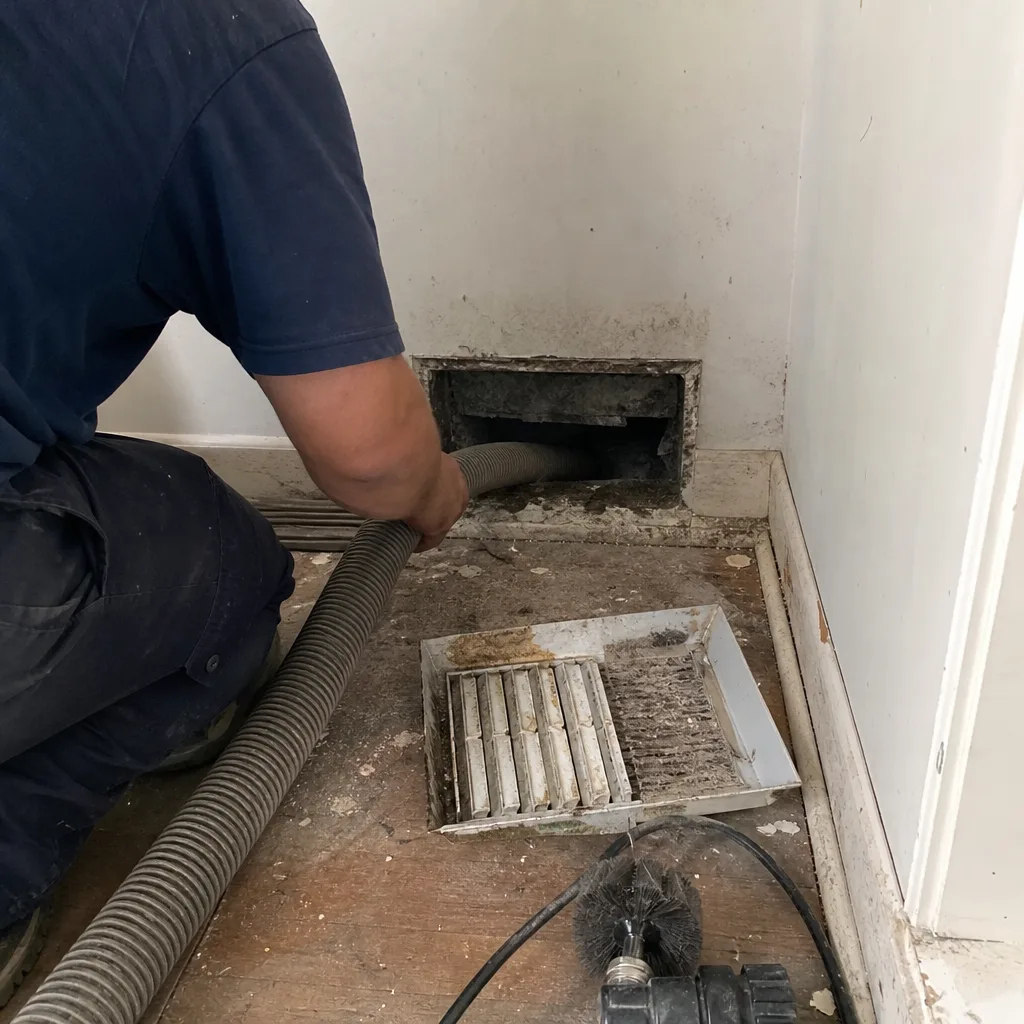 Before
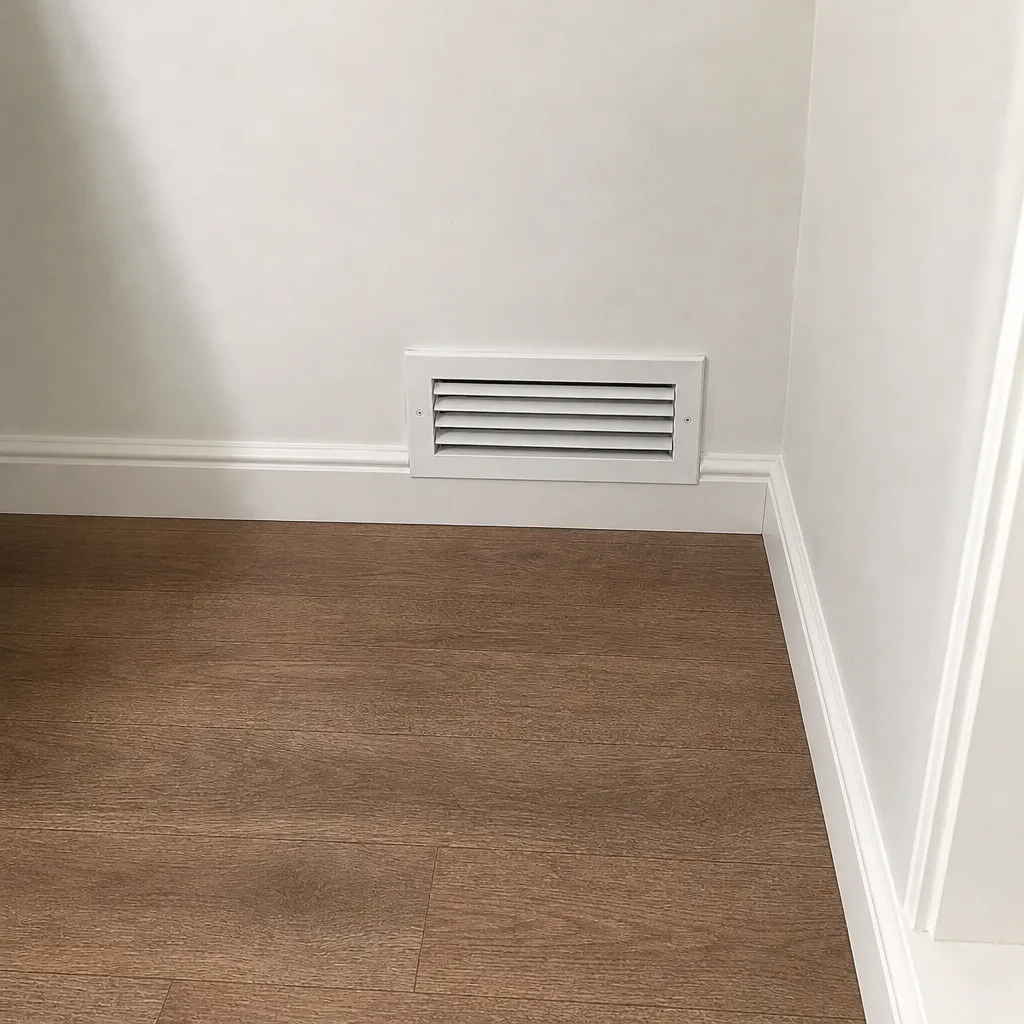 After
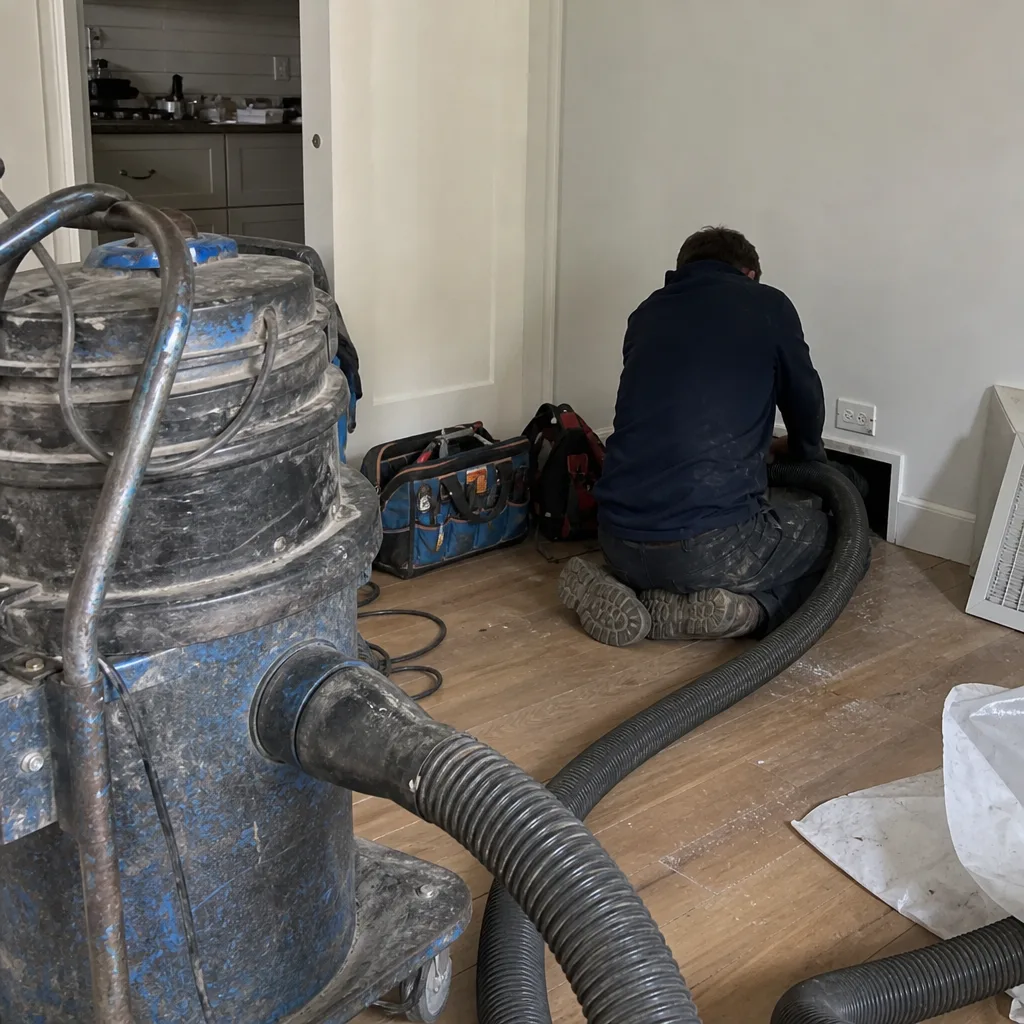 Before
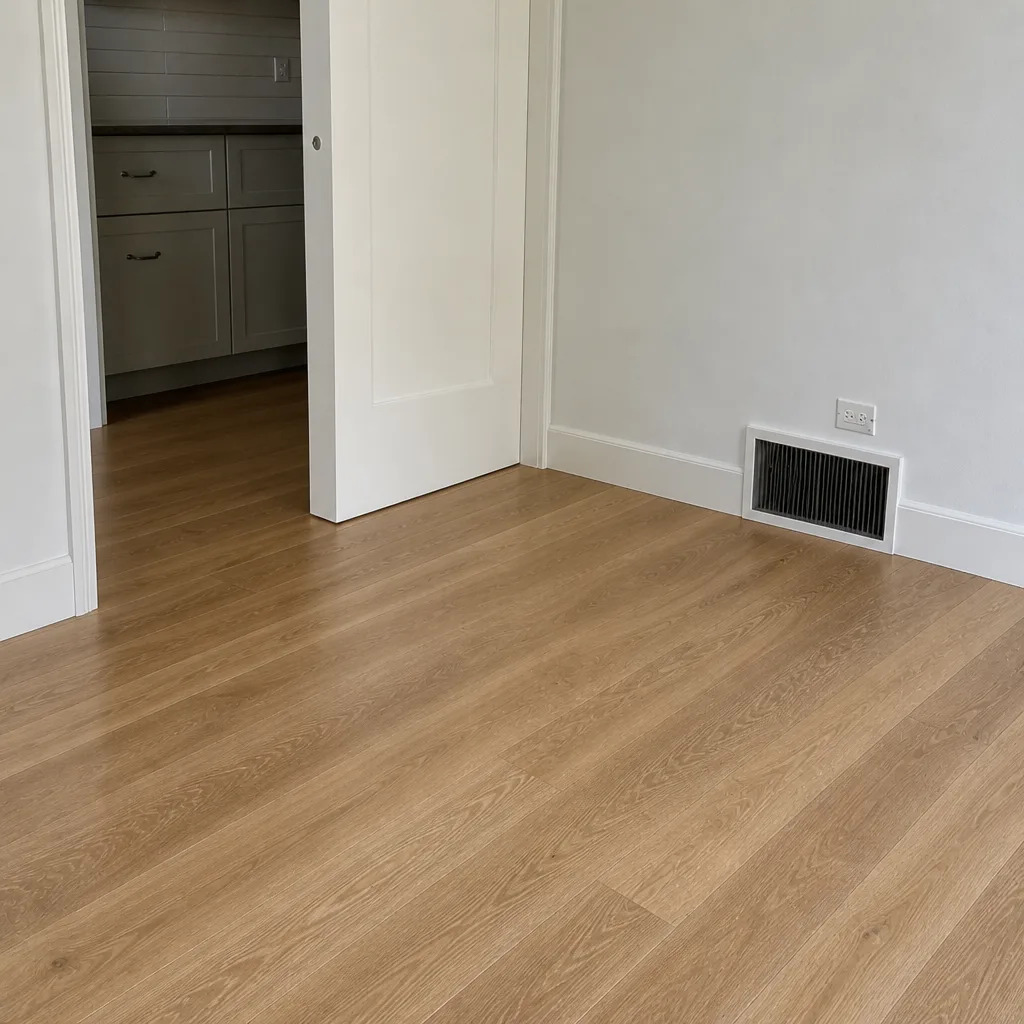 After
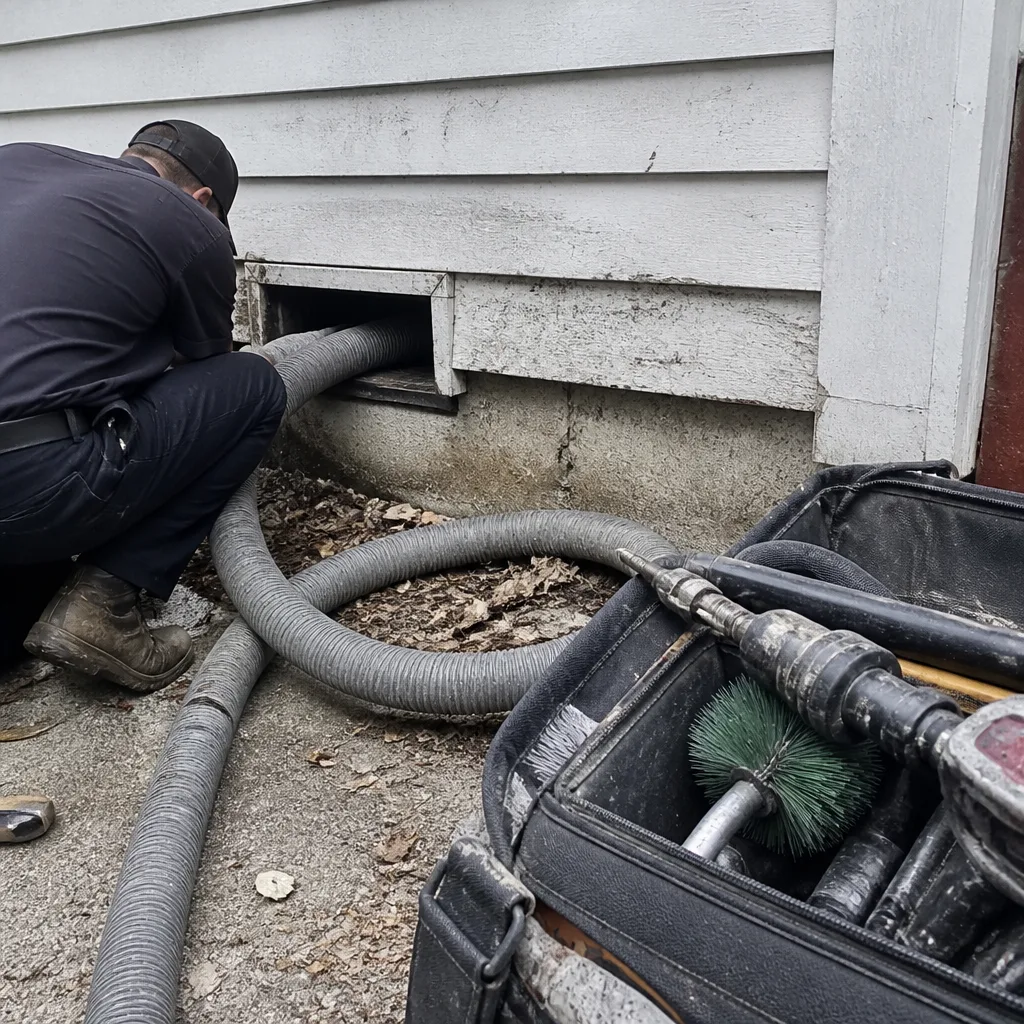 Before
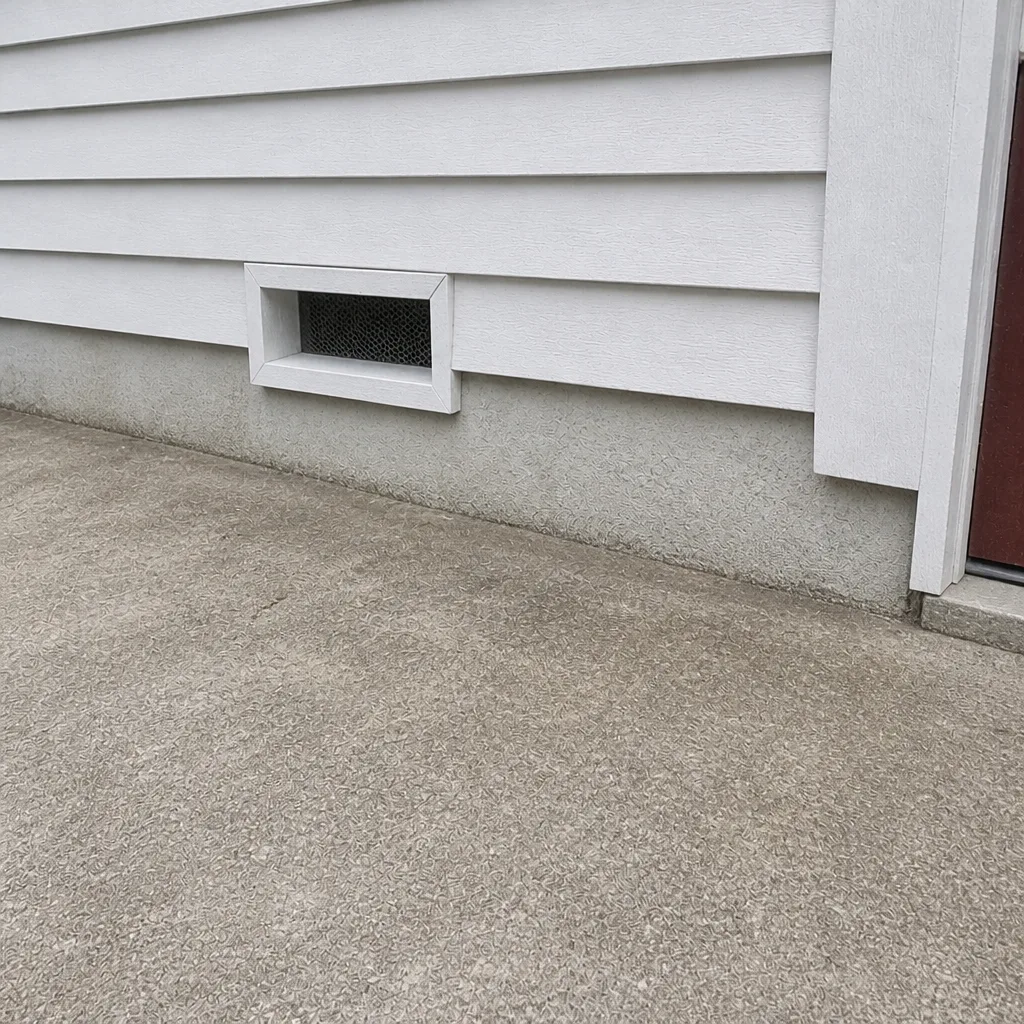 After
When to Call a Professional
Call for a professional duct assessment after any of these occur in a Charleston home: floodwater reached the living space or the mechanical closet; wind or debris intrusion through the roof or siding touched the attic where ductwork runs; the HVAC system was run while water was present; smoke or soot entered the home from a fire or wildfire; visible mold appears on grilles or near the air handler; the system smells musty after the storm has passed; or the post-restart registers are blowing weak at one or more rooms. If you’ve already cleaned, and the system still smells or the bill is up, that’s also a call. Charleston Duct Cleaning offers free estimates in Charleston – call (888) 274-9947. We answer 24/7. Fast dispatch from 7am to 7pm, Sunday through Friday. A call outside dispatch hours is booked into the next opening.
Frequently Asked Questions
No. Turn the system off at the thermostat and the breaker and leave it off until a professional has assessed the ducts. Running the air handler after water intrusion distributes moisture through every duct run, saturates interior insulation, and turns a containable problem into replacement work. Get standing water out, run dehumidifiers in the living space, and call for an assessment first.
Only a professional inspection can tell you for sure, but there are signs to look for: water staining at registers, musty smells that don’t clear after the rest of the house dries, weak airflow at some registers and normal at others, and visible separation or sagging in attic duct runs. A proper diagnostic uses a camera inspection and physical checks at flex connections and the plenum – it’s not a visual walkthrough. Call (888) 274-9947 for a free estimate; the assessment will tell you which category you’re in.
Yes. Wildfire and structural fire smoke contains sub-micron soot particles that stick to duct surfaces and won’t come out with brushing alone. Proper remediation uses HEPA extraction (Nikro-tier rigs, for example) with simultaneous contact cleaning and in-work-area air scrubbing, followed by odor neutralization. If the fire was close and the air handler was running during it, treat the ducts as contaminated. Call (888) 274-9947 for an exact quote – estimates are free.
Turn the system off at the breaker, cover the outdoor condenser with a fitted cover or secured tarp (or a weighted plywood sheet), seal the lineset and electrical penetrations where they enter the wall, and photograph the system while it’s still dry. These four steps limit how much wind-driven rain and debris can enter the duct system through the outdoor equipment. After the storm, don’t restart until the system has been assessed.
A typical full-home duct cleaning runs several hundred dollars, with duct repair work priced separately per job. We set one flat price per system, agreed before work starts, and we don’t price by the vent. We don’t charge a service call fee, and the written estimate sets the final price. Call (888) 274-9947 for an exact quote – estimates are free.
Because they’re selling a different service. The low quote is usually a consumer shop vac and a quick pass, no HEPA extraction, no containment, no repair capability. On a storm-contaminated system, that’s not a smaller version of the job – it leaves the contaminants where they were. Ask two questions before you hire: what equipment will be used, and do you repair ducts or only clean them. The answers sort the real services from the touring operators.
No, not properly. Consumer equipment can’t reach the trunk interior, can’t achieve HEPA-level filtration, and can’t contain the loosened material during the process. Worse, running a shop vac on a contaminated duct system often just redistributes the contaminants into the living space. Given what a storm intrusion leaves behind, a professional assessment first and professional remediation second is the right sequence.
Photos and video of every visible duct component before cleaning begins, a written timeline of events (when water arrived, whether the HVAC ran, when it was shut down), a written professional assessment describing what’s wet and contaminated, and before-and-after photos of the remediated system. Keep all of it together. Adjusters won’t accept photos taken after the cleaning has started as evidence of the original condition.
The Bottom Line
Storm preparedness for your duct system comes down to three things: shut it down before landfall, leave it off after water intrusion, and document everything before anyone touches it. Run the pre-storm protocol, respect the 48-hour rule, and insist on a written scope before any cleaning starts. When you need remediation, look for HEPA extraction with simultaneous contact cleaning, in-work-area containment, and a contractor who repairs ducts – not just cleans them. That’s a different tier of service than the coupon-price operation, and it’s the one that actually ends the problem. If you’re here in Charleston and want to talk through your system’s state before or after a storm, we’re reachable at (888) 274-9947. We answer 24/7. Fast dispatch from 7am to 7pm, Sunday through Friday.
If you’re still building out your home’s emergency plan, our main Charleston Duct Cleaning page lays out the full range of services, and the Charleston city page has more on how storm cycles play out in this housing stock.
Written by the team at Charleston Duct Cleaning.